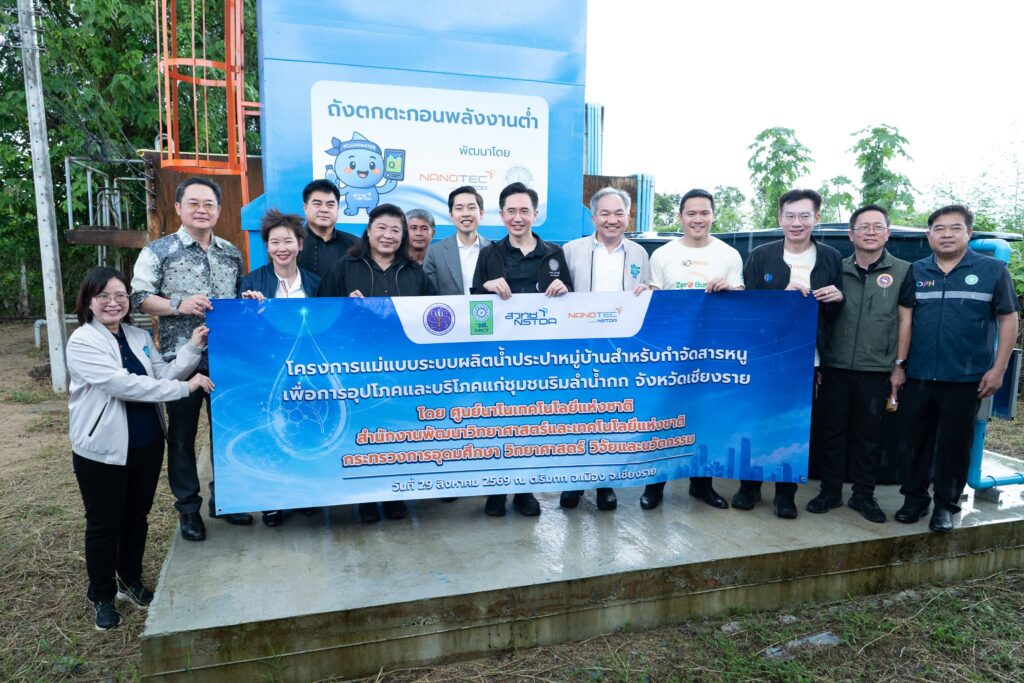

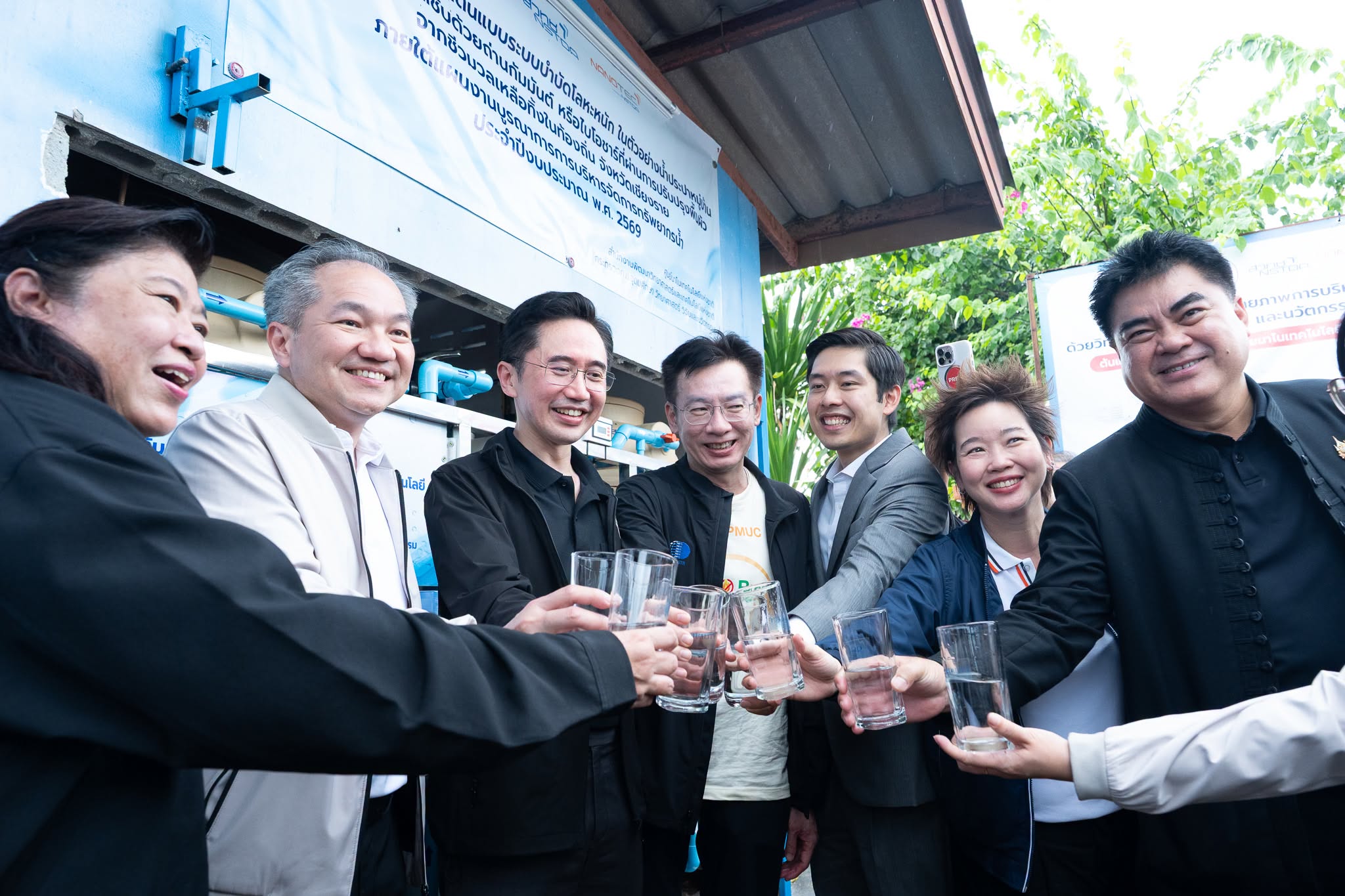
August 29, 2026 | Muang Ngim Community Hall, Rim Kok Subdistrict, Mueang Chiang Rai District, Chiang Rai Province — The Ministry of Higher Education, Science, Research and Innovation (MHESI), through the National Science and Technology Development Agency (NSTDA) and the Synchrotron Light Research Institute (Public Organization) (SLRI), is advancing research toward practical applications by delivering a model village water supply system for arsenic removalfor household consumption and use to communities along the Kok River in Chiang Rai Province.
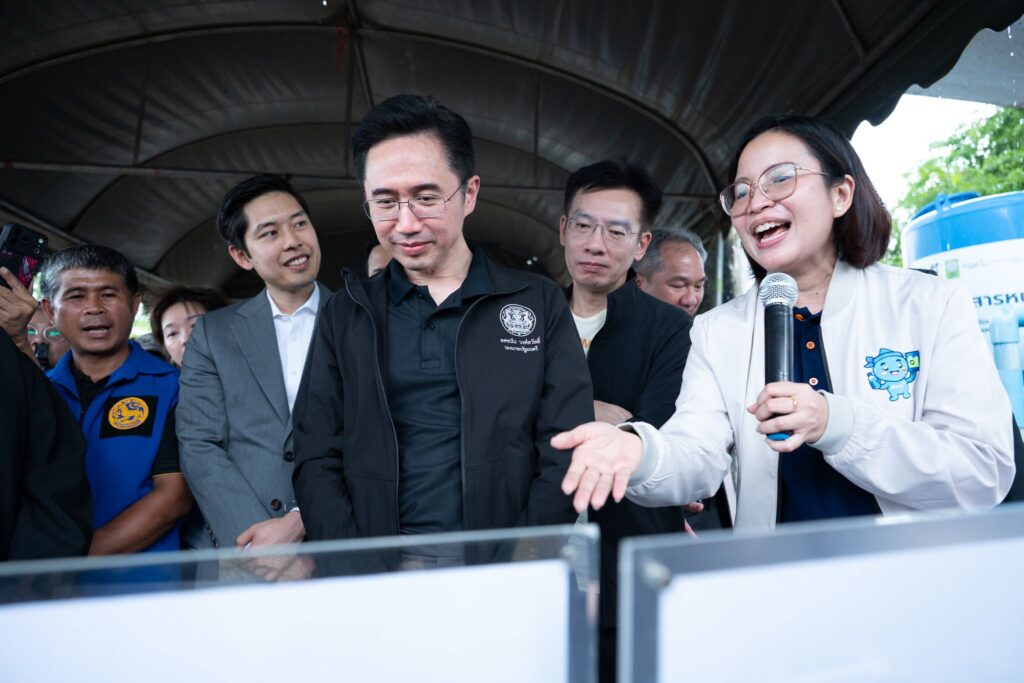
The handover ceremony was presided over by Prof. Dr. Yodchanan Wongsawat, Deputy Prime Minister and Minister of Higher Education, Science, Research and Innovation, with Mr. Chucheep Phongchai, Governor of Chiang Rai Province, together with the Chiang Rai Provincial Administrative Organization Permanent Secretary, executives of agencies under MHESI, representatives of the Office of the National Water Resources (ONWR), heads of government agencies, community leaders, and residents of Ban Muang Ngim and Ban Rim Kok in Chiang Rai Province in attendance. The initiative aims to address water-quality challenges arising from environmental factors and disasters while upgrading community water supply systems to ensure greater safety and sustainability.
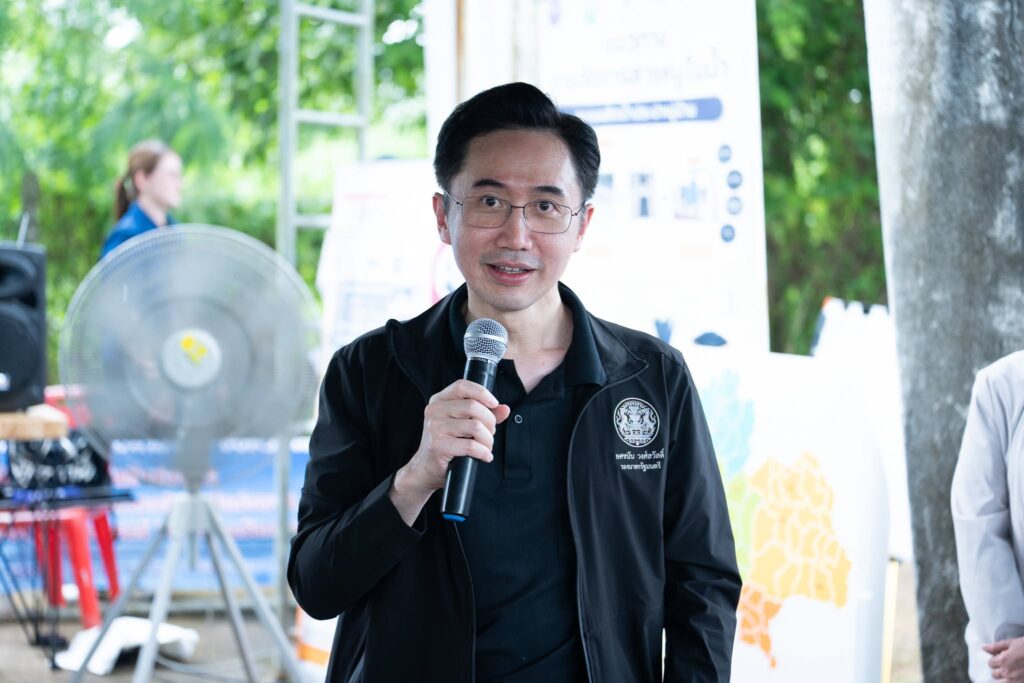
Prof. Dr. Yodchanan Wongsawat, Deputy Prime Minister and Minister of Higher Education, Science, Research and Innovation, said that MHESI has an important mission to apply scientific knowledge, technology, research, and innovation to address national challenges and improve people’s quality of life. The Ministry is committed to ensuring that “research does not remain on the shelf,” but is translated into tangible benefits for communities, particularly in areas involving the environment and water resources, which are fundamental to human well-being. MHESI’s policy emphasizes research that directly addresses national priorities and the needs of target groups, generates economic and social impact, and expands equitable access to the benefits of science and innovation. This is consistent with the Ministry’s efforts to position NSTDA as a “research engine for the nation,” transforming real-world challenges into innovations that serve the public.
“Water is a fundamental issue that directly affects people’s health, the economy, and quality of life. The delivery of this model village water supply system for arsenic removal in the Kok River Basin reflects MHESI’s role in connecting policy, research, and practical implementation at the local level. It begins with community challenges and leads to the development of technologies suited to actual local conditions, which are then transferred to local authorities for use in protecting the well-being of their communities. The key goals are to strengthen water security and reduce disparities in access to clean water, ensuring that science and innovation become part of the solution to local challenges and contribute to a better quality of life for the Thai people,” Prof. Dr. Yodchanan said.
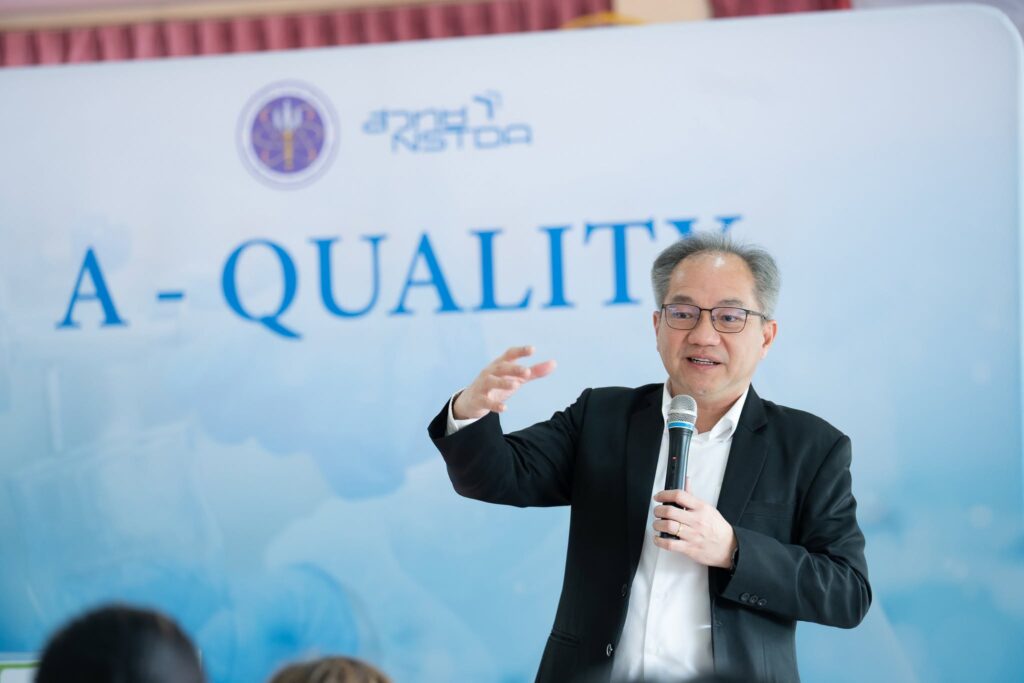
Prof. Dr. Sukit Limpijumnong, President of the National Science and Technology Development Agency (NSTDA), said NSTDA is committed to advancing research and development to address the country’s critical challenges and needs, particularly environmental issues and water-resource management, which require systematic support from science, technology, and innovation.
Under the Pre-Battle: Clean Water Innovation for Quality of Life (A-QUALITY) program, NSTDA is working to translate research into practical applications, ranging from water-quality monitoring and water-treatment system development to prototype development and technology transfer to local agencies. The ultimate goal is to ensure that people have reliable access to clean and safe water under all circumstances.
The model village water supply system for arsenic removal represents another research achievement by NSTDA, developed by the National Nanotechnology Center (NANOTEC) to address raw-water quality challenges in the Kok River Basin, including turbidity, arsenic, and heavy-metal contamination. The approach involves selecting technologies appropriate to the specific context of each area while promoting community participation to establish sustainable water-resource management.
NSTDA has previously piloted the development of water-treatment systems in Ban Rim Kok, Mae Yao Subdistrict, and Ban Muang Ngim, Rim Kok Subdistrict, Chiang Rai Province, covering more than 700 households, with the aim of improving the quality of community tap water to meet the Department of Health’s standards for tap water.
NSTDA has also developed AquaNano, a drinking-water production and filtration system based on nanotechnology. The system is capable of removing contaminants, including heavy metals, while incorporating a water-quality monitoring system. More recently, the technology has been further developed into a mobile nanotechnology-based drinking-water production unit for disaster response. The unit can produce up to 250 liters of clean water per hour and forms part of NSTDA’s efforts to translate science and technology into practical solutions under the A-QUALITY program.
Assoc. Prof. Dr. Saroj Rujirawat, Director of the Synchrotron Light Research Institute (Public Organization) (SLRI), said that SLRI has applied synchrotron-based analytical technology to investigate arsenic contamination in water sources. The technique can identify the chemical species and oxidation states of arsenic, which are relevant to its source, toxicity, and appropriate treatment approaches. The findings have contributed to the development of an innovative filtration system for treating arsenic and heavy metals in water intended for household use and consumption.
The system is designed to remove arsenic associated with fine suspended particles and capture dissolved arsenic using highly selective and efficient adsorbent materials.
Based on these findings, SLRI, together with Khon Kaen University and research partners, developed an arsenic-adsorbent material based on a negatively charged ion-exchange resin whose surface properties were modified to selectively capture arsenic and heavy metals. The team also applied its technical and engineering expertise to develop a water-treatment system for household use and consumption.
The system was installed and put into practical operation at the Ban Farm Samphanthakit Community Water Supply System, Village No. 6, Rim Kok Subdistrict, Mueang Chiang Rai District, Chiang Rai Province, to improve the efficiency of the community’s existing chemical coagulation and sedimentation-based water-treatment system and enhance its ability to reduce arsenic contamination. An RO (reverse osmosis) system was also installed to produce drinking water, helping provide cleaner and safer water for more than 250 households.
The water filtration system was also installed at Ban Mueang Daeng School, Mae Sai Subdistrict, Mae Sai District, Chiang Rai Province, to address water contamination associated with the Sai River and provide safer water for more than 700 primary school students and school personnel.
Mr. Ramil Phatthanamongkolchet, Permanent Secretary of the Chiang Rai Provincial Administrative Organization, said that the Chiang Rai Provincial Administrative Organization places strong emphasis on strengthening water security for local residents, particularly those living in the Kok River Basin. The Kok River is an important water source for people in Chiang Rai, supporting agriculture, household use, consumption, and everyday life. Changes in water quality, including increased turbidity and the detection of heavy-metal contamination, have made it necessary to rely on scientific data and technologies suited to the specific conditions of each locality.
“In the past, the Chiang Rai Provincial Administrative Organization has worked with the National Nanotechnology Center (NANOTEC), NSTDA, to strengthen water-resource management and improve standards for community water supply systems. The collaboration began with pilot areas in communities located near the Kok River, including Ban Rim Kok in Mae Yao Subdistrict and Ban Muang Ngim in Rim Kok Subdistrict. Work in both areas has been completed, covering more than 700 households. This collaboration is not simply about installing technology. It brings scientific, technological, and innovation-based knowledge to local communities so that they can better understand water quality and manage their water supply systems in ways that respond to actual local challenges. It also strengthens the capacity of water-system operators and village water-supply committees to systematically monitor water quality, maintain water-production systems, and manage risks associated with heavy-metal contamination,” Mr. Ramil said.
Mr. Ramil added that the collaboration between the Chiang Rai Provincial Administrative Organization and NANOTEC, NSTDA, is a concrete example of how research can respond to local needs. Starting from water-quality challenges in the Kok River, the initiative has led to the development of community water supply systems and further to capacity building among local residents. The ultimate goal is to ensure that people have access to safe water and reliable water-management systems that communities can maintain over the long term. This will play an important role in improving quality of life and strengthening water-resource security for people in Chiang Rai.
The Chiang Rai Provincial Administrative Organization also plans to continuously strengthen the capacity of village water-supply committees in communities located near the Kok, Sai, and Ruak rivers, enabling local communities to manage and maintain their own water systems sustainably. Knowledge and approaches gained from the pilot areas will also be expanded to other at-risk areas across Chiang Rai Province.
MHESI will continue to advance science, research, and innovation as practical tools for improving people’s lives and addressing challenges at the local level, particularly issues related to clean water and the environment, which directly affect the health and well-being of all Thai people. The Ministry will accelerate the translation of research knowledge into practical applications and expand appropriate innovations to communities across the country.
“MHESI’s goal is not merely to produce high-quality research, but to ensure that Thai people genuinely benefit from that research”—from access to clean water for household use and consumption and a safer environment to a better quality of life.
To achieve this goal, MHESI will continue working with research organizations, government agencies, local authorities, and communities to transform science and innovation into a driving force for protecting the well-being of the Thai people and building sustainable resource and environmental security