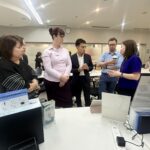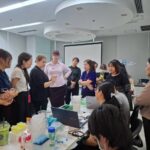

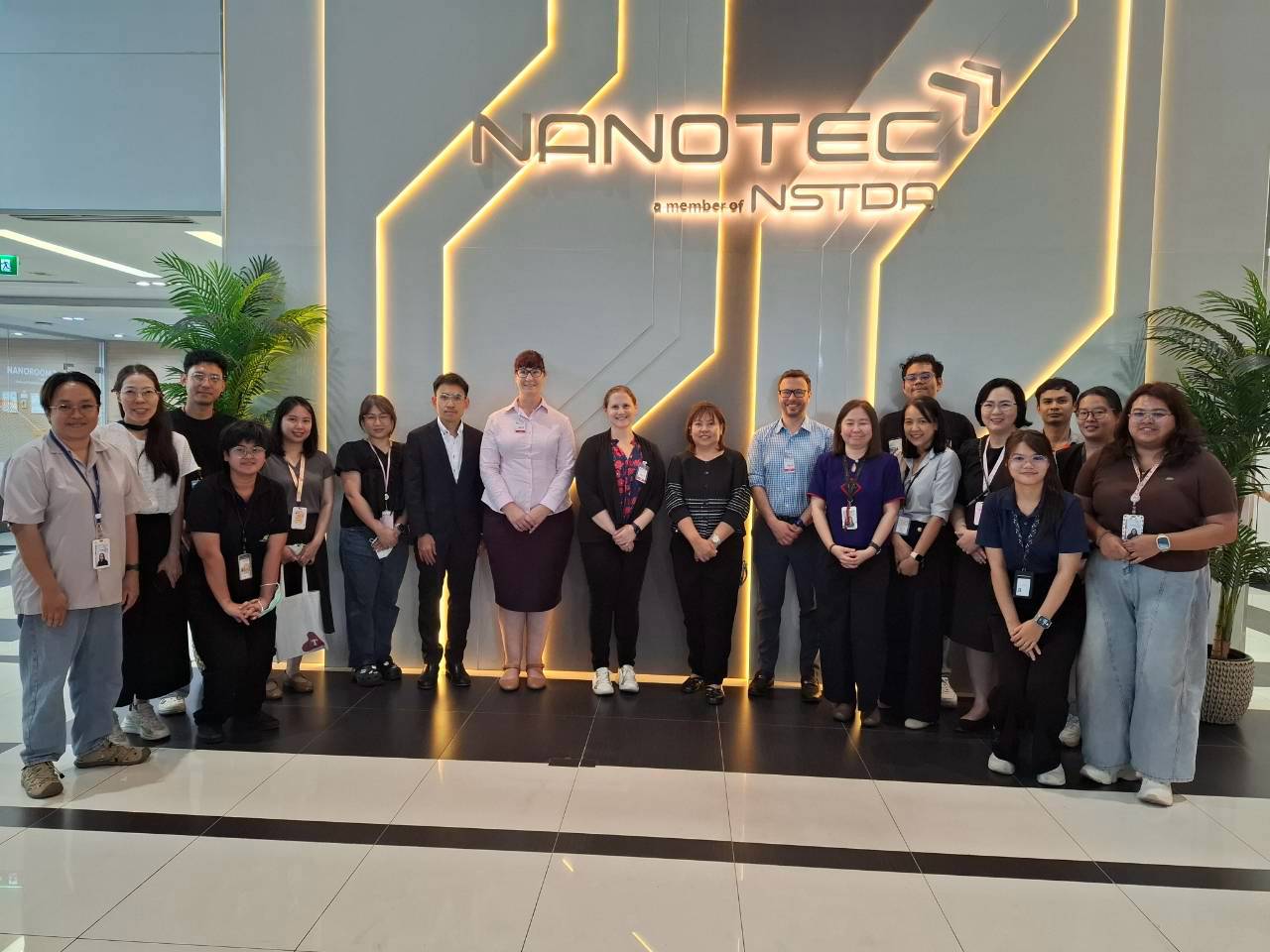
The National Nanotechnology Center (NANOTEC), under the National Science and Technology Development Agency (NSTDA), welcomed a delegation from the MIT Center for Biomedical Innovation (CBI) on 28 October 2026 at One North, INC2 Building, Thailand Science Park, to advance discussions on research collaboration in water quality monitoring and environmental technologies.
The meeting followed an initial visit by MIT CBI to NANOTEC on 27 August 2026, during which both parties explored opportunities to develop rapid, low-cost, and user-friendly water quality monitoring technologies, particularly for detecting heavy metals and other contaminants.
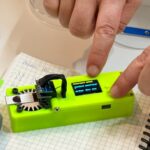
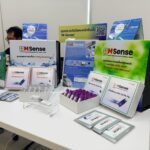
During the latest meeting, the MIT CBI delegation demonstrated a portable electrochemical reader and conducted hands-on technology demonstrations with NANOTEC researchers. The NANOTEC team presented its expertise in detecting heavy metals and other contaminants, as well as sensor technologies designed for application in real-world environmental conditions.
Advancing Joint Water Quality Monitoring Technologies
A key focus of the discussion was the potential integration of MIT CBI’s portable electrochemical reader with NANOTEC’s disposable electrochemical sensor strips. This integrated approach aims to enable rapid and convenient on-site detection of heavy metals and other water contaminants, supporting environmental monitoring and reducing reliance on laboratory-based analysis for selected applications.
Both parties also exchanged views on the technical requirements for developing a collaborative monitoring system, including the compatibility of the technologies, target contaminants, and opportunities for prototype development and field testing.
The collaboration builds on the shared interest of NANOTEC and MIT CBI in translating research and innovation into practical solutions that address real-world environmental challenges.
Next Steps Toward Research Collaboration
As a next step, the research teams will coordinate further technical discussions to define research objectives, identify target contaminants, assess system compatibility, and develop plans for prototype testing under field conditions. These activities will help evaluate the feasibility of establishing a joint research project with practical applications.
The collaboration aligns with NANOTEC’s Water and Environment Solution strategic focus, one of its four strategic focus areas (4SF), and reflects the center’s commitment to strengthening international research partnerships and advancing nanotechnology-based solutions for sustainable water management and environmental protection.