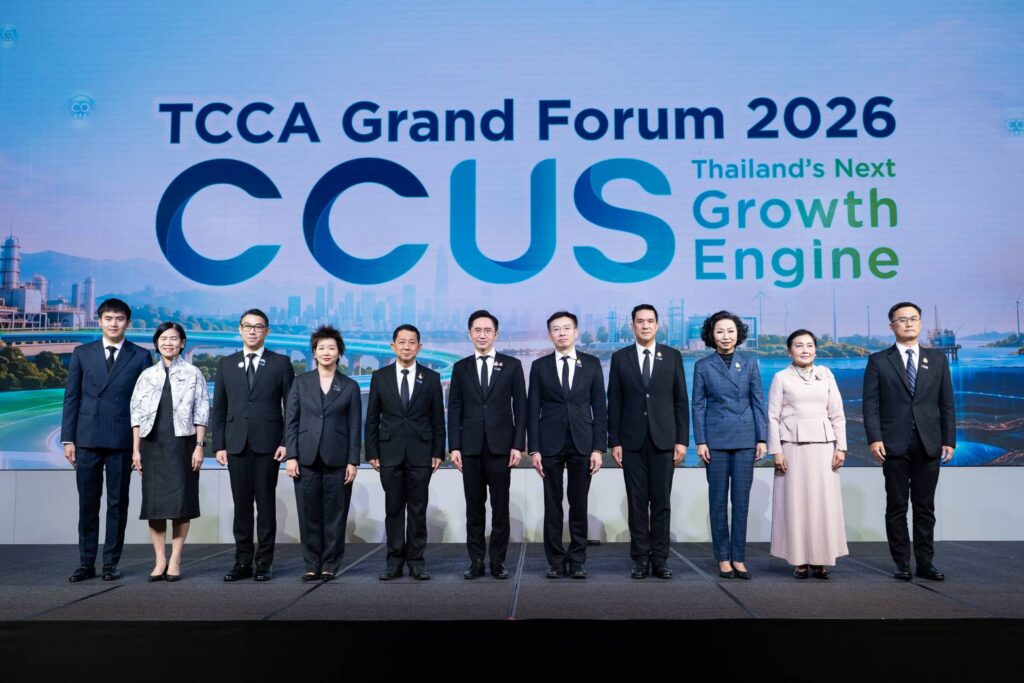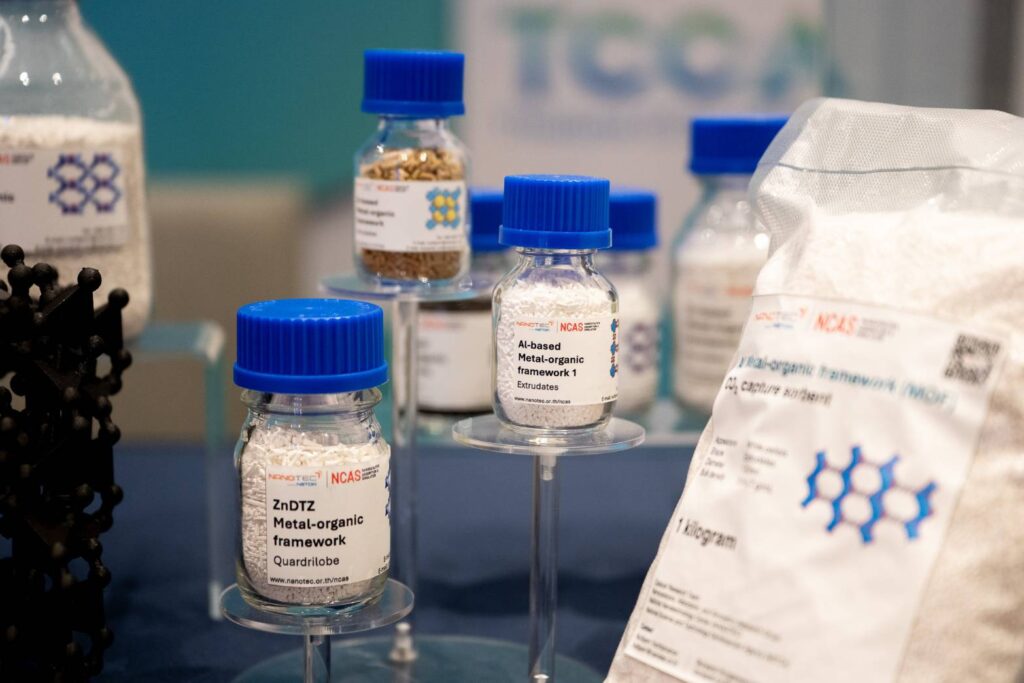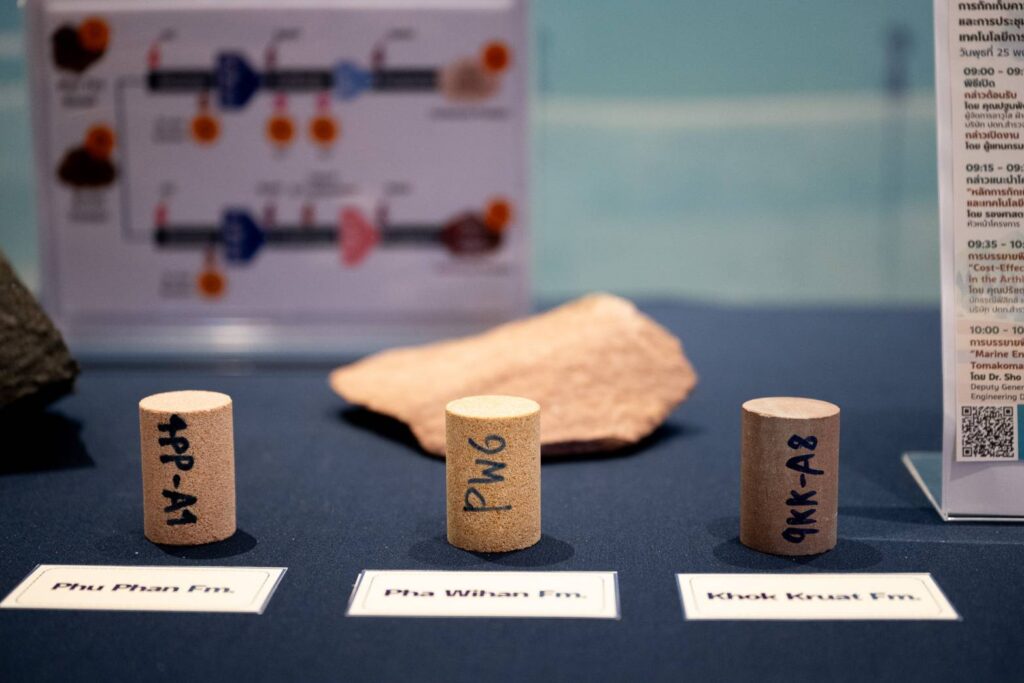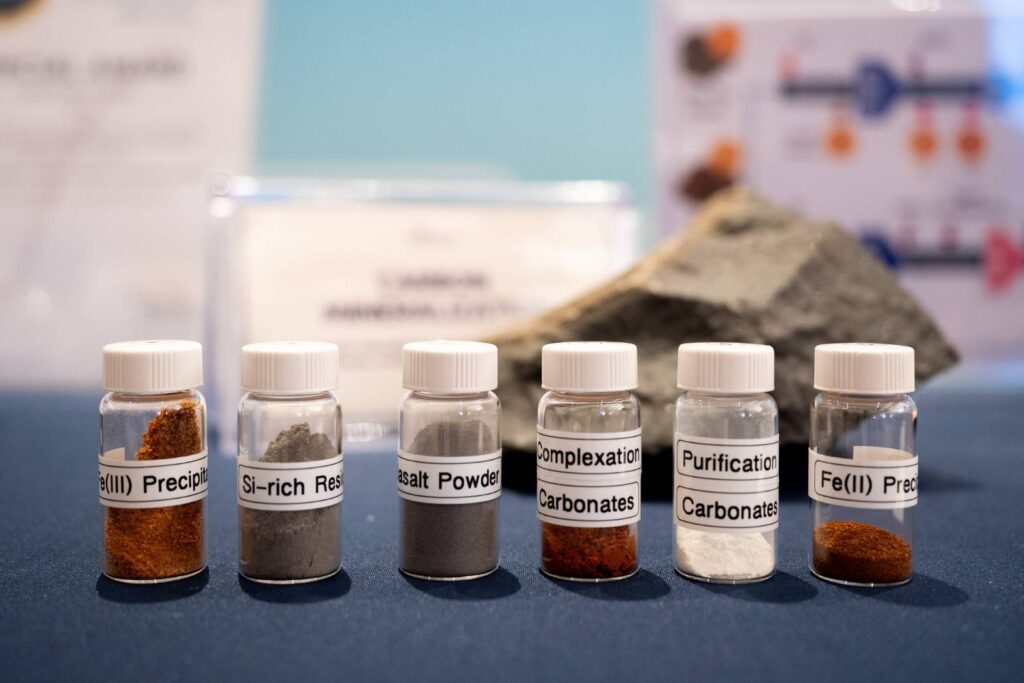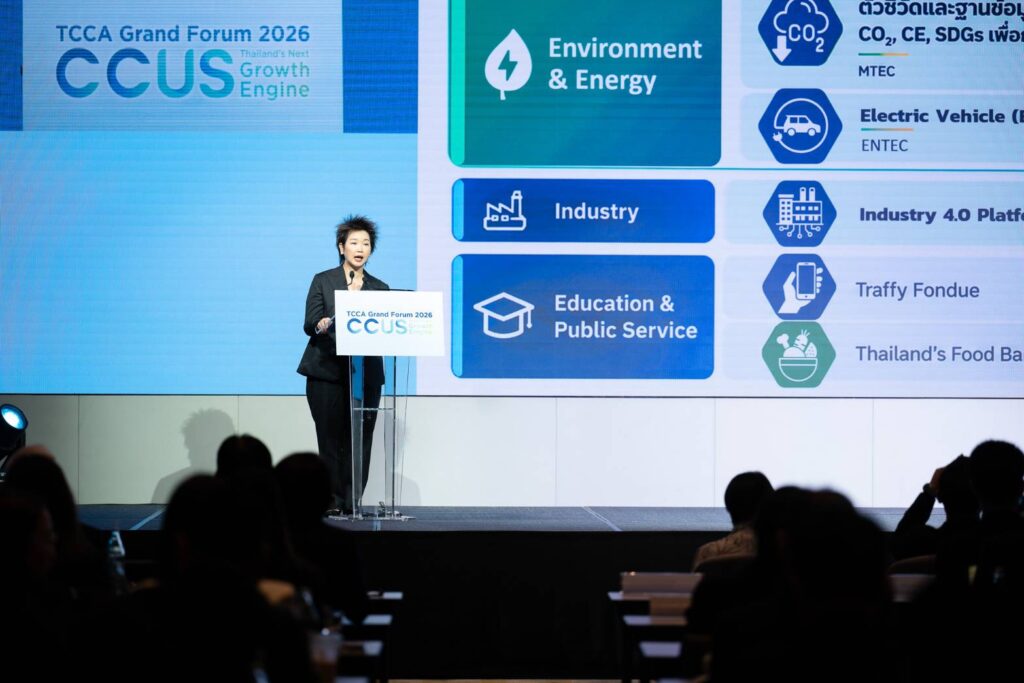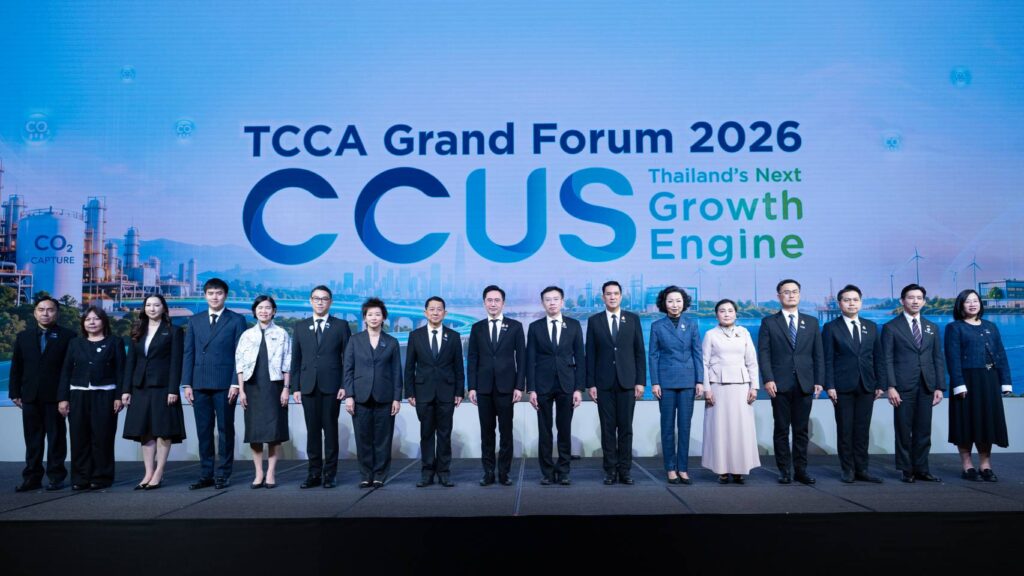

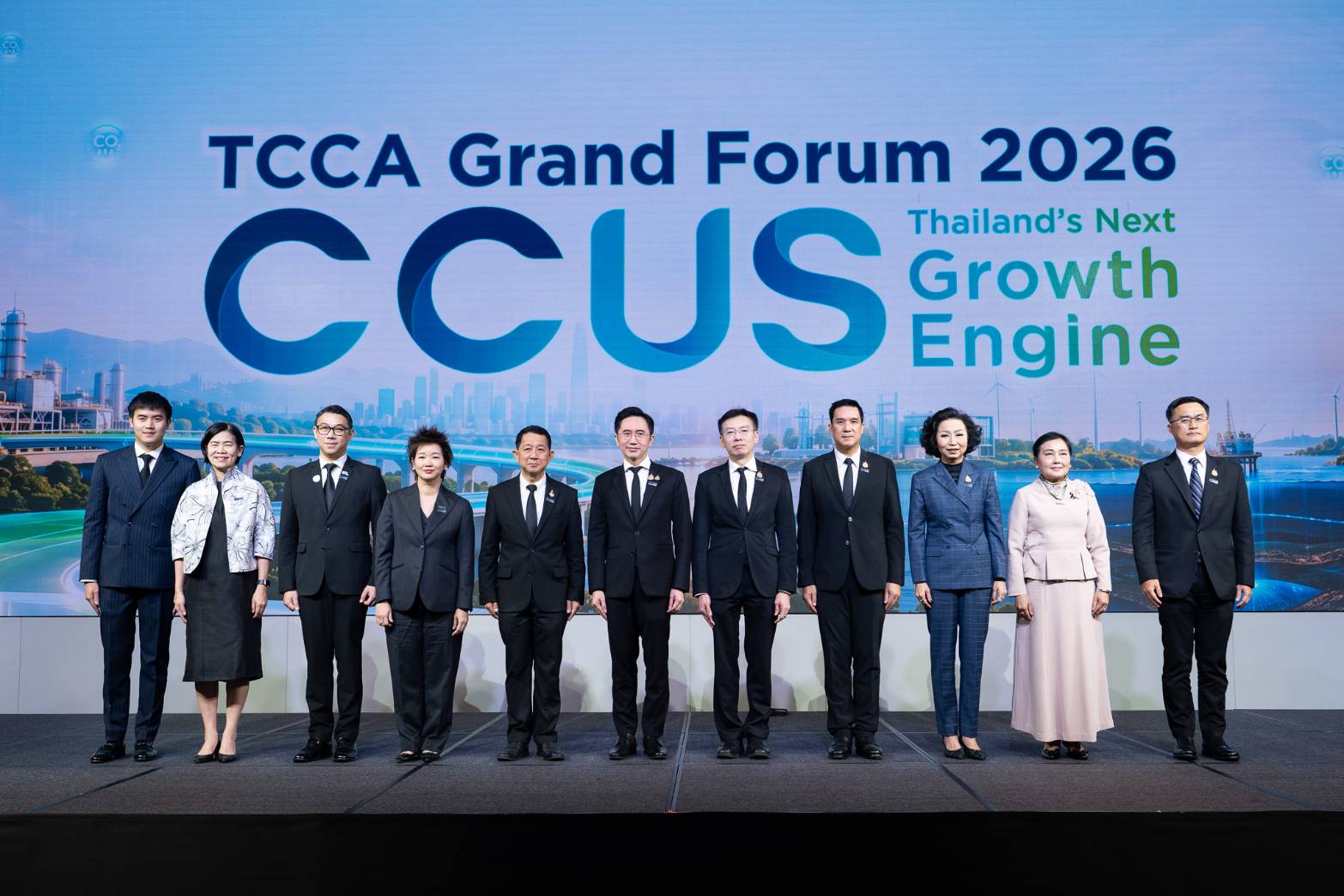
Bangkok, 5 November 2026 – The Ministry of Higher Education, Science, Research and Innovation (MHESI), through the National Nanotechnology Center (NANOTEC), under the National Science and Technology Development Agency (NSTDA), and the Thailand CCUS Alliance (TCCA), hosted the “TCCA Grand Forum 2026: CCUS – Thailand’s Next Growth Engine” at Grande Centre Point Prestige Bangkok.
The forum provided updates on Thailand’s progress in carbon capture, utilization and storage (CCUS), covering policy, legislation, technology development, workforce readiness and international cooperation. It also highlighted TCCA’s achievements over the past two years and outlined the future direction of the country’s CCUS industry through the Thailand CCUS Industrialization Master Plan.
The plan sets out a pathway to turn carbon management technologies into new industrial and economic opportunities. Over the 25-year period from 2025 to 2050, CCUS development is projected to generate more than THB 1 trillion in cumulative economic value and support over 500,000 jobs.
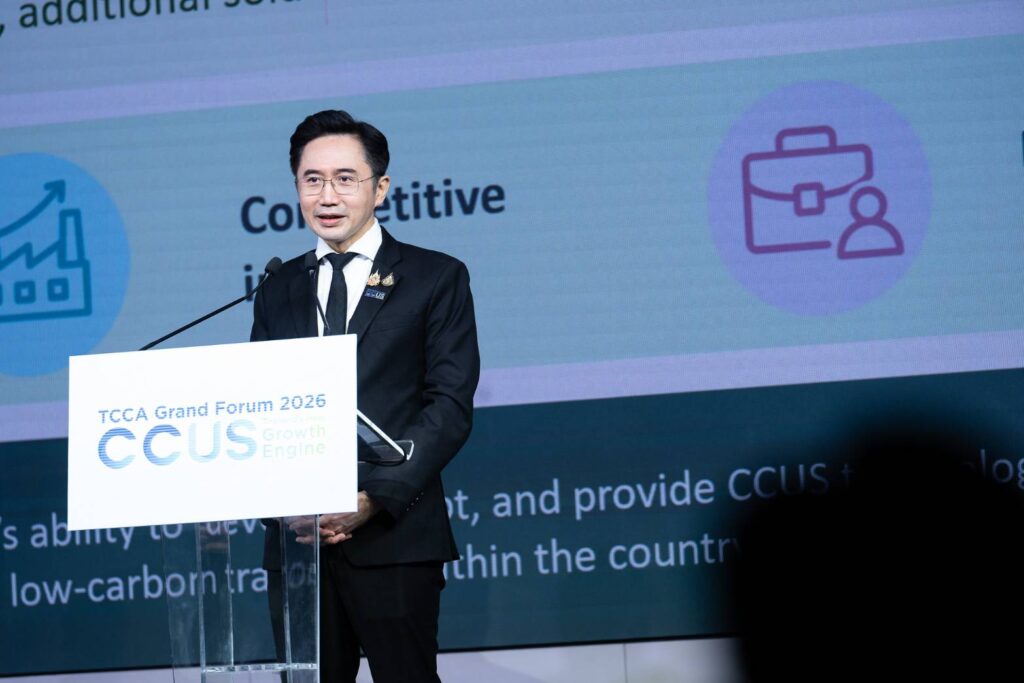
Prof. Dr. Yodchanan Wongsawat, Deputy Prime Minister and Minister of Higher Education, Science, Research and Innovation (MHESI), said MHESI sees CCUS as an opportunity to establish a new growth engine for Thailand. Science, research and innovation will play a key role in upgrading existing industries, particularly energy, petrochemicals and construction materials, to compete in a low-carbon economy. The development of CCUS will also create opportunities for new businesses, technologies and high-skilled employment, supporting the country’s transition towards Net Zero by 2050.
The Thailand CCUS Industrialization Master Plan, developed through a study by Chiang Mai University and NSTDA in collaboration with TCCA, assesses the potential economic and employment impacts of CCUS deployment. Based on a scenario in which CCUS is developed to manage approximately 60 million tonnes of carbon dioxide (CO₂) annually by 2050, investment and operations over 2025–2050 could generate an estimated THB 1.06 trillion in cumulative economic value and support 585,194 jobs. Key industries expected to drive this development include power generation, cement, petrochemicals, and oil and gas.
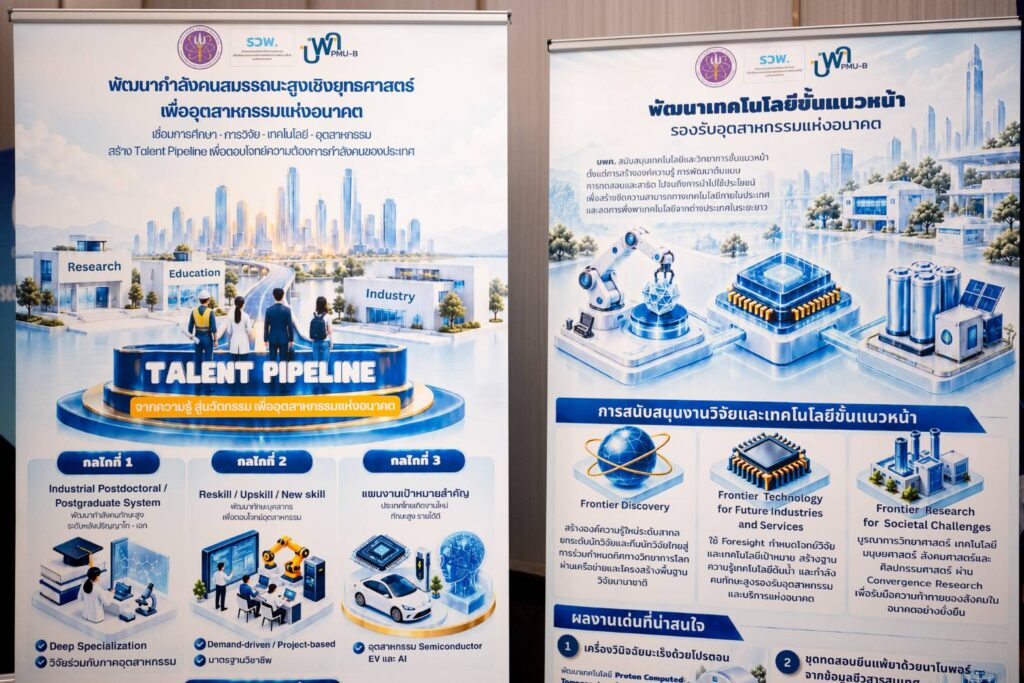
“CCUS represents an opportunity to develop new industries, strengthen Thailand’s workforce and build on the country’s existing economic capabilities,” said Prof. Dr. Yotsanan. MHESI will work to connect universities, research institutions and the industrial sector, ensuring that technology development responds to real industrial needs and can be tested under actual operating conditions. Workforce development will also be a priority, equipping engineers, researchers and the next generation of professionals with the skills needed for emerging industries.
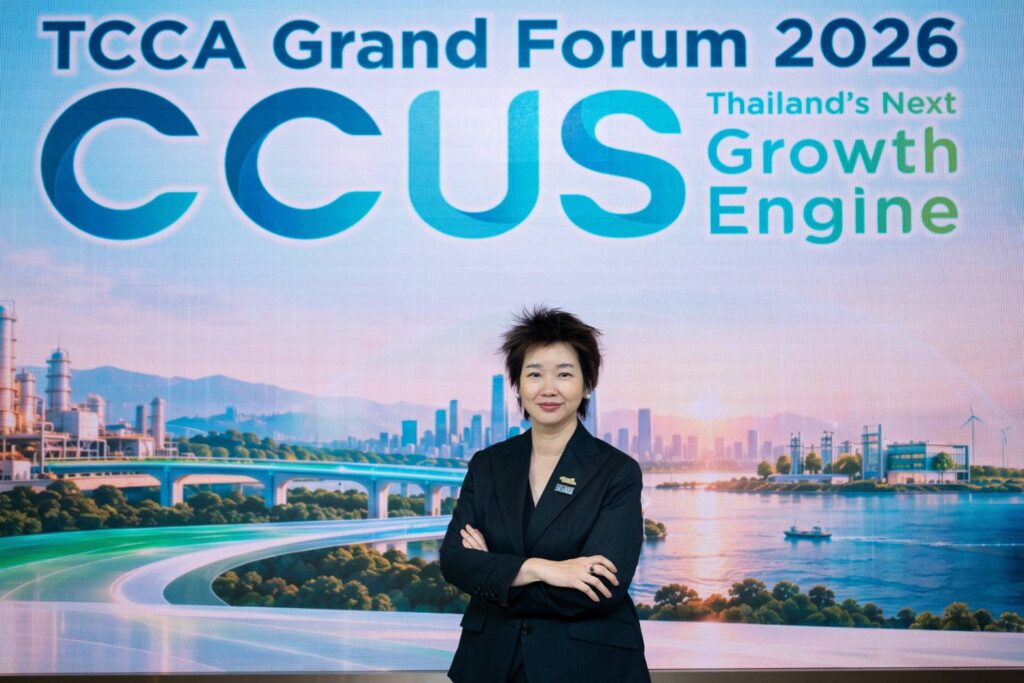
Dr. Uracha Ruktanonchai, Executive Director of NANOTEC, NSTDA, said NSTDA is committed to advancing CCUS technologies and developing skilled personnel to meet the practical needs of industry. TCCA serves as a platform for connecting research partners and strengthening the CCUS ecosystem. Current efforts include pilot projects that test technologies using actual industrial flue gas, as well as the development of testbeds where researchers, private companies and academic institutions can work together.
“Thailand needs to move CCUS technology beyond the laboratory and into real industrial settings,” Dr. Urucha said. “NSTDA is advancing technologies and workforce capabilities that address industrial requirements, while using TCCA to connect research efforts and partners across the ecosystem.”
NSTDA is supporting pilot projects that allow technologies to be tested with actual industrial emissions. These efforts will help build technical knowledge and readiness for commercial-scale deployment, supporting industries in reducing carbon emissions and contributing to Thailand’s Net Zero 2050 target.
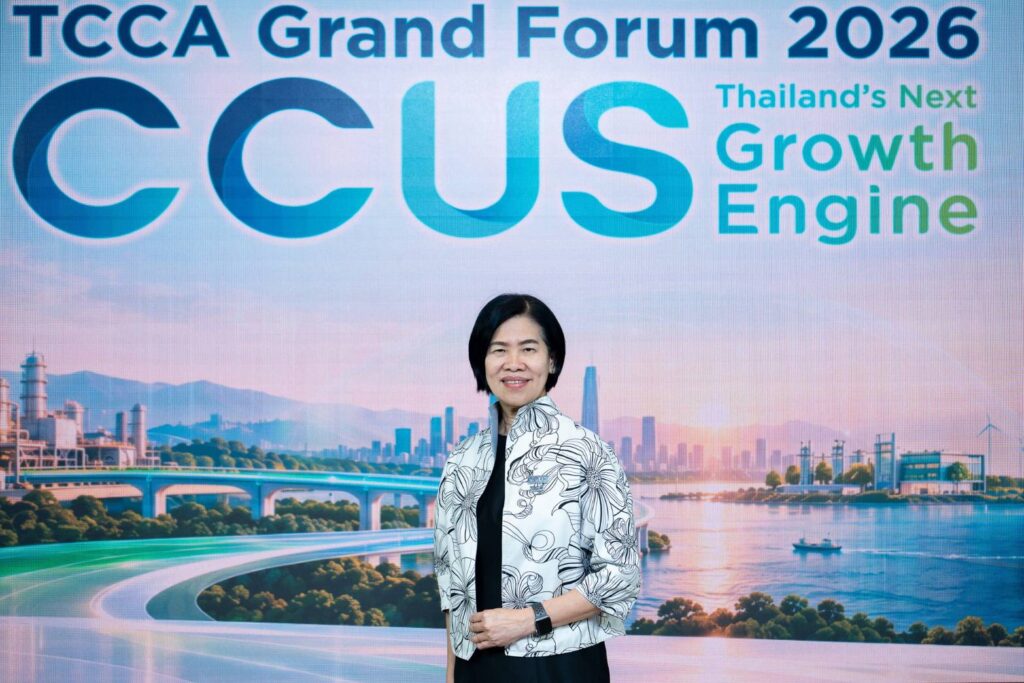
Dr. Pongwipa Lohsomboon, Chair of the Thailand CCUS Alliance (TCCA) Steering Committee and an expert member of the Thailand Science Research and Innovation (TSRI) Policy Council, said TCCA was established to connect government agencies, industries, academic institutions and research organizations working in carbon capture, utilization and storage.
Over the past two years, the alliance has expanded to 97 partner organizations and developed a database of experts, technologies, research equipment and CCUS projects. It has also strengthened links between research organizations and industry, supported the development of the national CCUS industrialization plan and expanded cooperation with international CCUS organizations.
“Bringing together 97 partner organizations is an important step towards building Thailand’s CCUS ecosystem. TCCA is connecting research, technology and industry to turn collaboration into practical outcomes,” Dr. Pongvipa said.
Looking ahead, TCCA will focus on supporting pilot projects, advancing technology development, preparing policy frameworks and facilitating investment partnerships. The alliance is also considering the establishment of a TCCA association to provide a more sustainable structure for long-term collaboration.
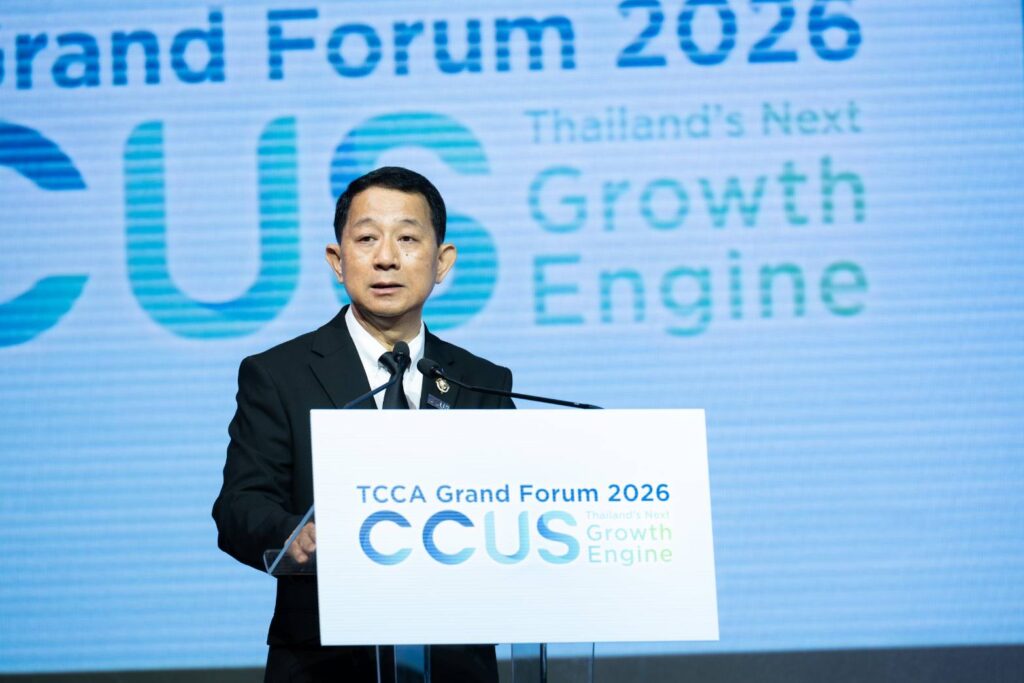
Dr. Supalak Parn-anurak, Deputy Director-General of the Department of Mineral Fuels (DMF), Ministry of Energy, said Thailand is laying the groundwork for a national-scale carbon capture and storage (CCS) system by building on geological knowledge and expertise developed through the petroleum industry.
Current efforts include exploring and assessing potential CO₂ storage sites in the Upper Gulf of Thailand to support the development of the Eastern Thailand CCS Hub. The hub is expected to connect major industrial emission sources in the Eastern Economic Corridor (EEC) with shared carbon transportation and storage infrastructure.
“The development of a CCS hub will provide essential infrastructure, enabling industries in Thailand to access safe and efficient carbon storage services and supporting emissions reduction at the national level,” Dr. Supalak said.
Shared transportation and storage infrastructure could help reduce costs compared with individual facilities developed by each industrial operator. However, its implementation must be supported by appropriate legislation, safety standards and monitoring systems to ensure the long-term security of CO₂ storage.
Mr.Sivach Kaewcharoen, Director of the Greenhouse Gas Mitigation Division, Department of Climate Change and Environment (DCCE), Ministry of Natural Resources and Environment, said CCUS will be an important part of Thailand’s efforts to achieve Net Zero by 2050, particularly in industries where reducing emissions through conventional methods remains challenging.
The national study estimates that Thailand will need to manage approximately 60 million tonnes of CO₂ annually by 2050, with demand coming from sectors such as power generation, cement, petrochemicals, and oil and gas.
“Achieving Net Zero requires technologies that are ready for deployment, clear regulations and economic mechanisms that give the private sector confidence to invest,” Mr. Siwat said.
He emphasized the need for investment incentives, including tax measures, support for initial investment costs, carbon pricing mechanisms and public-private partnerships. Developing viable business models with clear revenue streams and appropriate risk-sharing arrangements will also be important to encourage private sector participation.
The TCCA Grand Forum 2026 highlighted the potential of CCUS to link greenhouse gas emissions reduction with Thailand’s industrial and economic development. Achieving this potential will require coordinated efforts from government agencies, industries, research institutions and international partners.
As a central platform for collaboration, TCCA connects research, technology, data, policy and industrial demand. This collaborative approach will help strengthen Thailand’s CCUS ecosystem, support the development of low-carbon industries, maintain industrial competitiveness and advance the country towards its Net Zero 2050 goal.