
NANOTEC, NSTDA, Deploys M-Sense for Arsenic Screening with Results in 5 Minutes, Alongside Nanotechnology-Based Water Filtration Systems
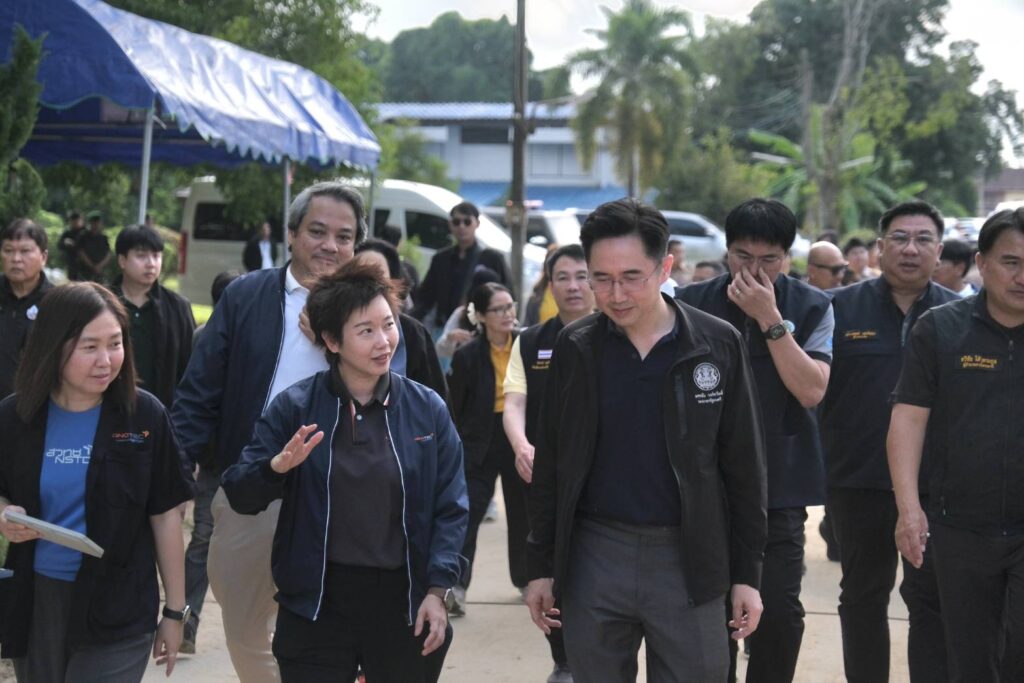
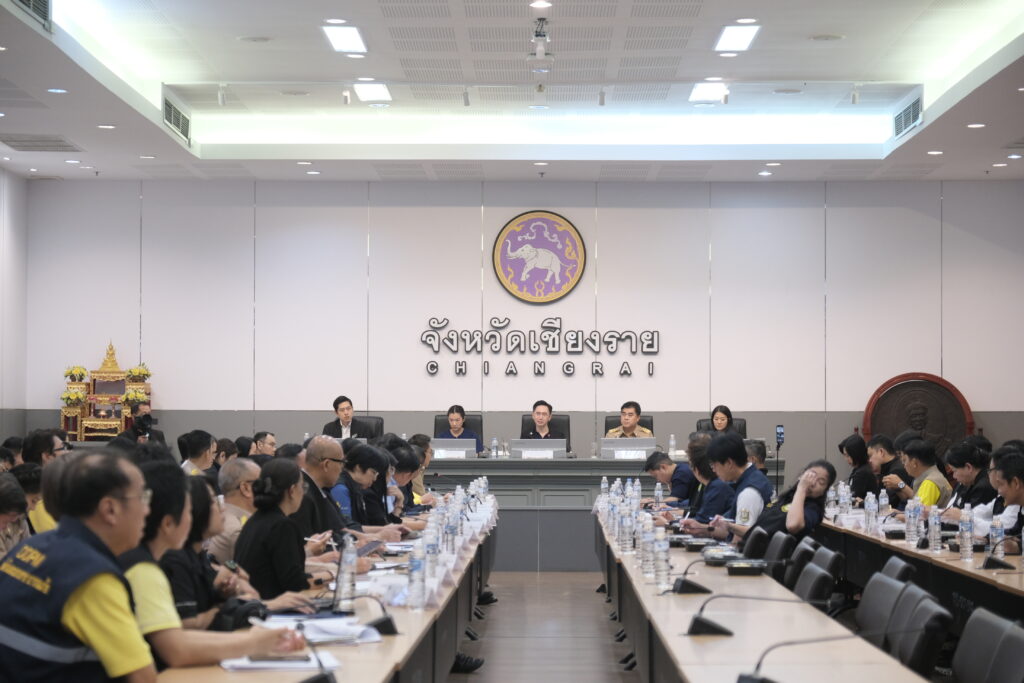
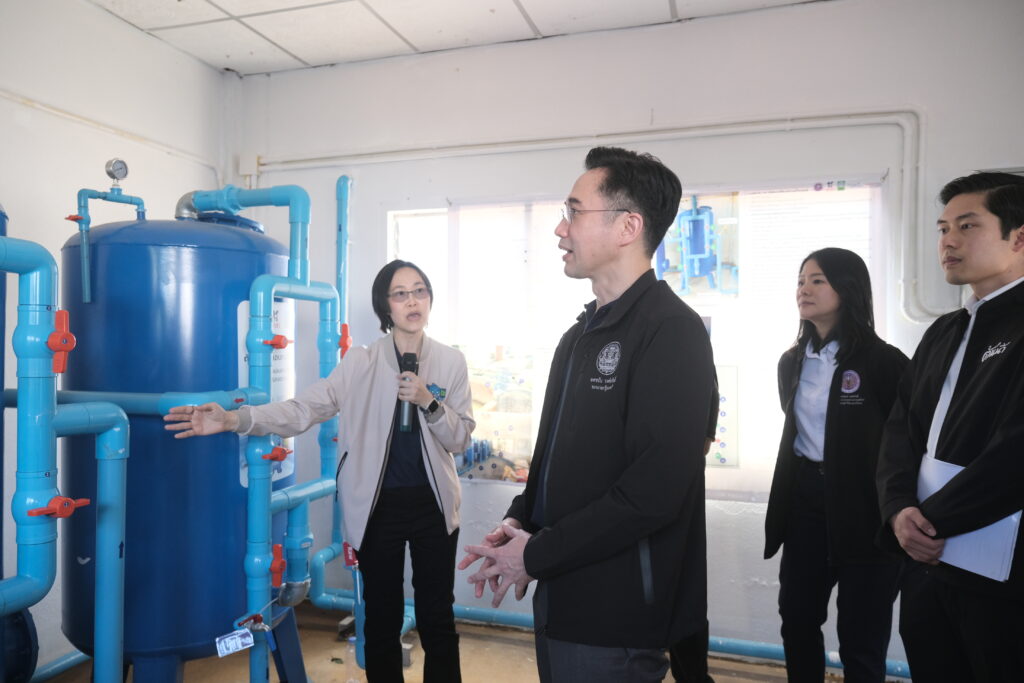
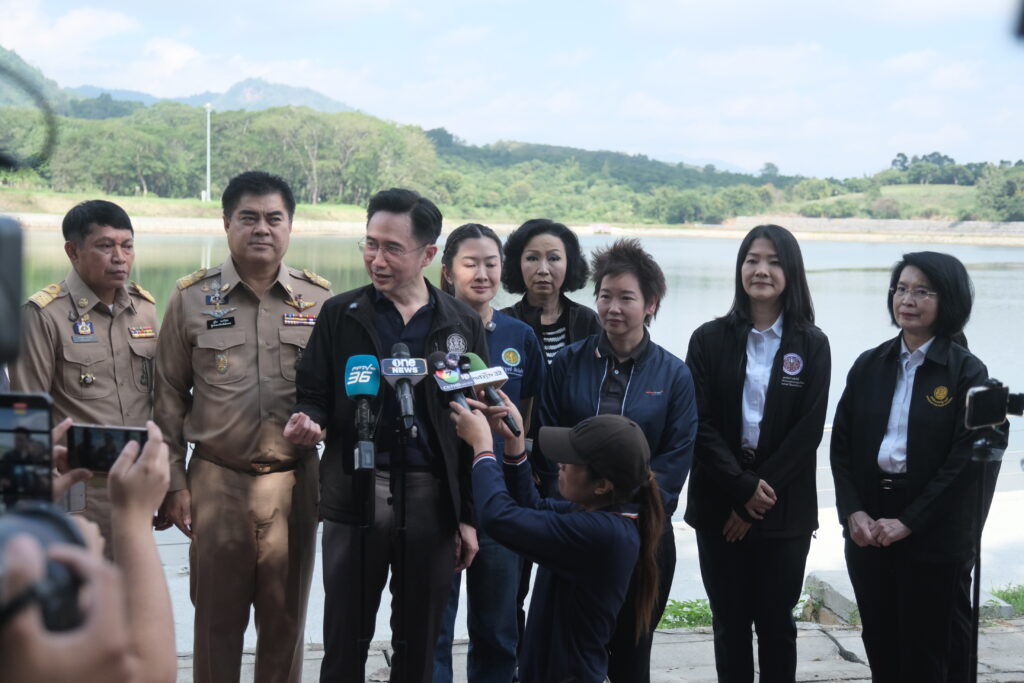
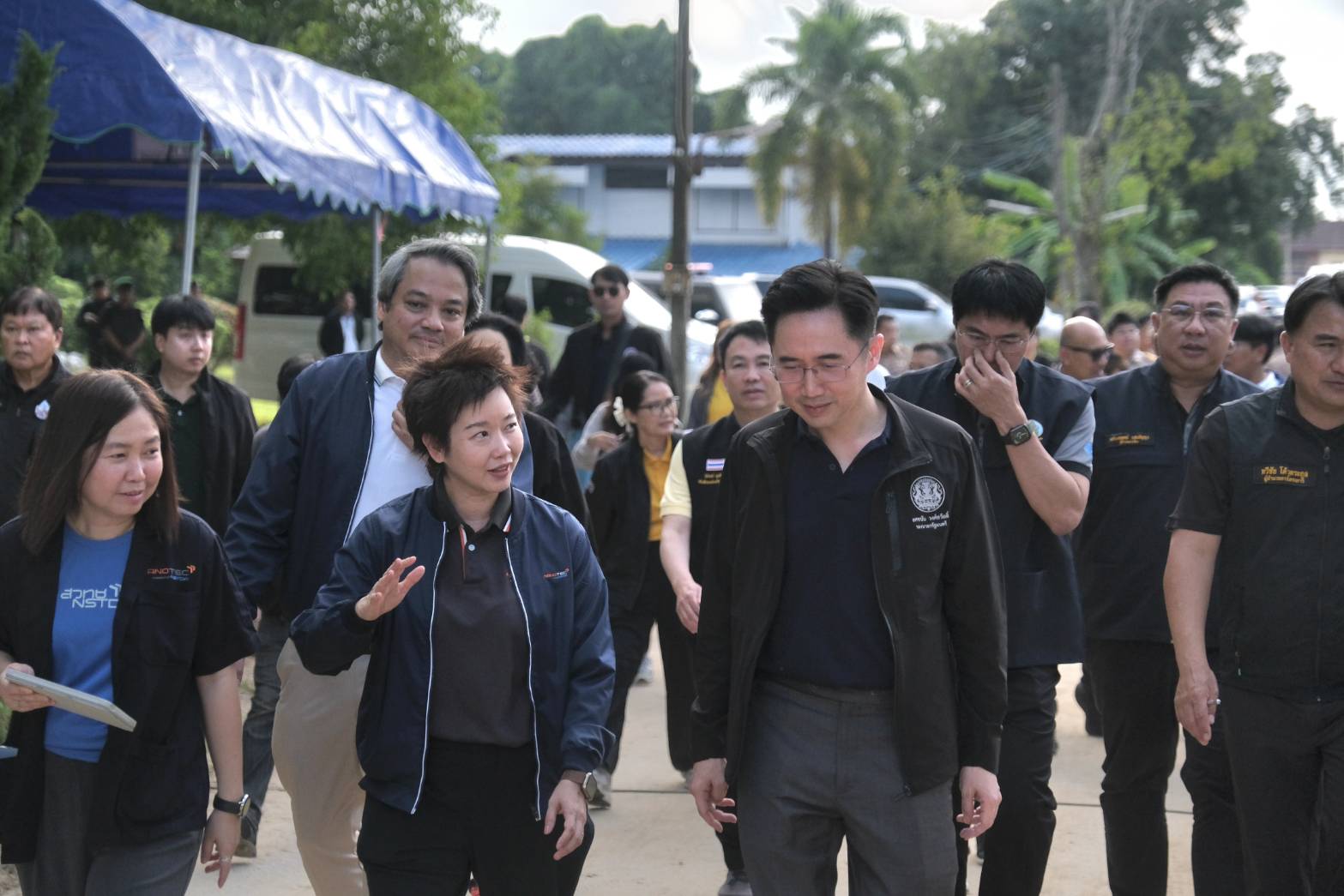
On 23 November 2026, Prof. Dr. Yodchanan Wongsawat, Deputy Prime Minister and Minister of Higher Education, Science, Research and Innovation (MHESI), led a team of scientists and relevant government agencies back to Chiang Rai to strengthen local efforts in addressing water quality challenges. The mission aims to translate research collaboration and nationwide scientific expertise into practical solutions for communities. The National Science and Technology Development Agency (NSTDA), led by Dr. Uracha Ruktanonchai, Executive Director of NANOTEC, brought water quality testing and treatment innovations to the field, including the M-Sense heavy metal detection kit and technologies developed under the A-QUALITY: Clean Water Innovation for Quality of Life program. The initiative integrates water monitoring, treatment, and management, positioning Chiang Rai as a model area for addressing water quality crises at the national level.
This field mission follows the Deputy Prime Minister’s visit to monitor water quality in Mae Sai District on 15 November 2026. During that visit, MHESI demonstrated the M-Sense testing kit and handed it over to the Chiang Rai Provincial Public Health Office for water screening in affected areas. The initial findings were reported on 17 November 2026, demonstrating how research-based innovations can support timely decision-making in the field. Samples tested included drinking water from hospitals, filtered water from schools, groundwater, and bottled drinking water.
The Deputy Prime Minister explained that the nationwide mobilization of researchers aims to bring ready-to-use technologies to communities facing immediate challenges. Addressing the root causes, however, requires discussions with neighboring countries supported by clear scientific evidence. MHESI has established four urgent measures: installing water filtration and treatment systems in affected areas; providing portable arsenic and heavy metal testing kits to residents and farmers; developing sediment-trapping systems; and mapping high-risk locations while applying isotope techniques to identify the sources of contamination.
Field Demonstration in Ban Mueang Daeng: Water Testing and Sediment-Trap Systems
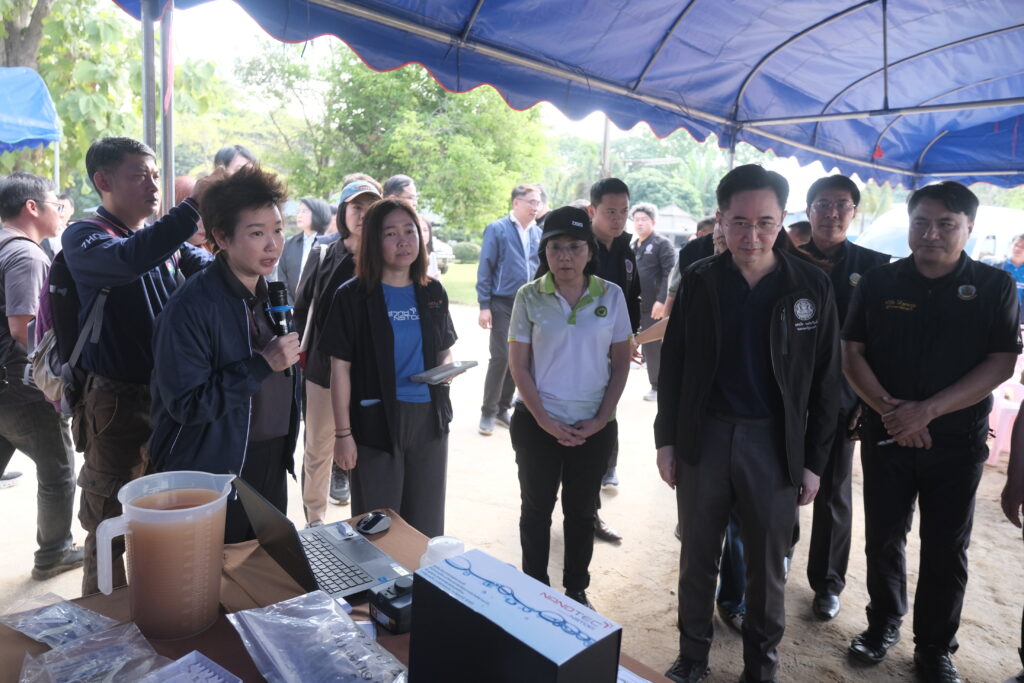
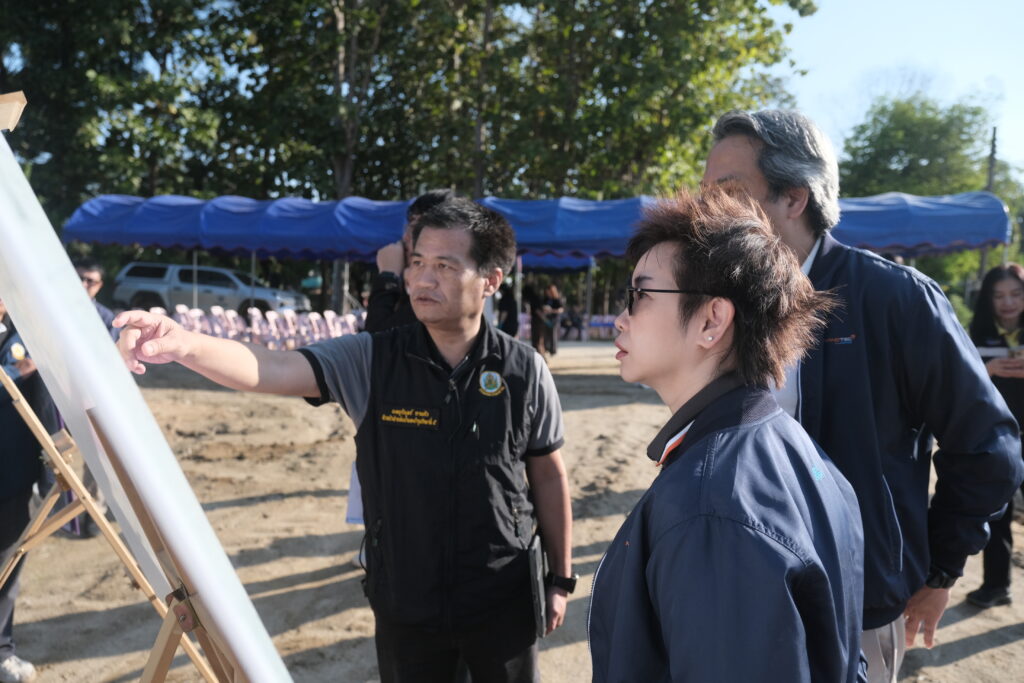
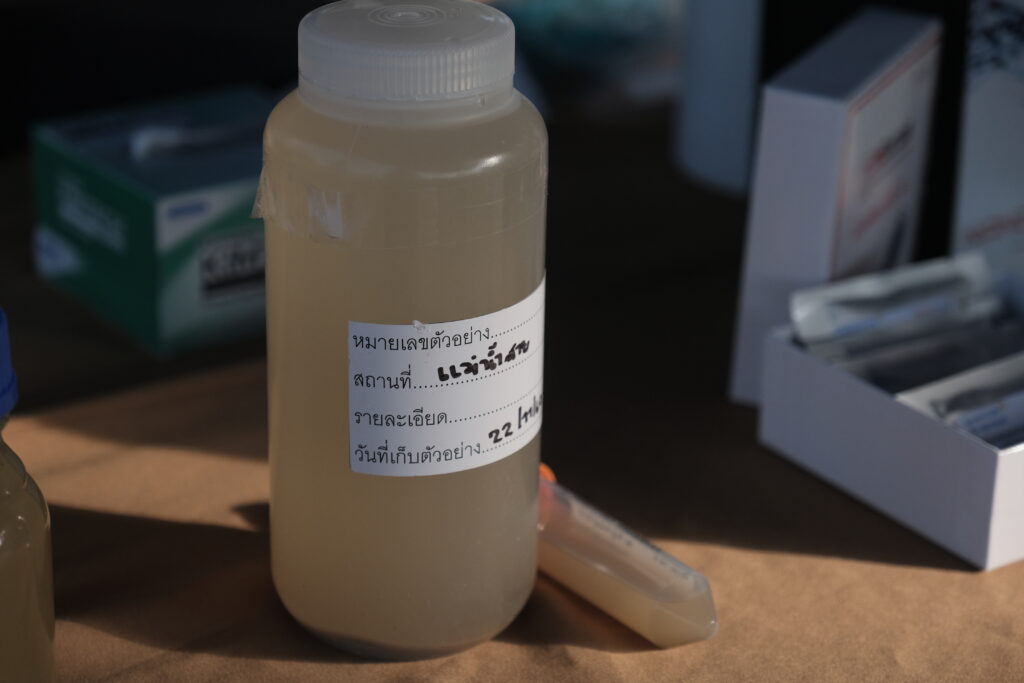
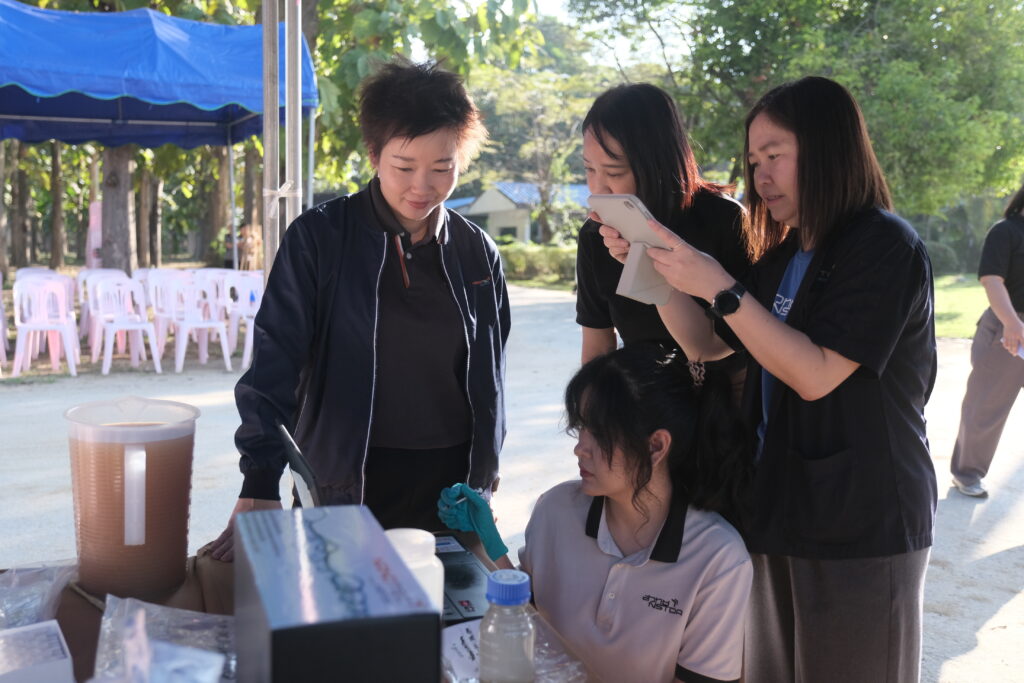
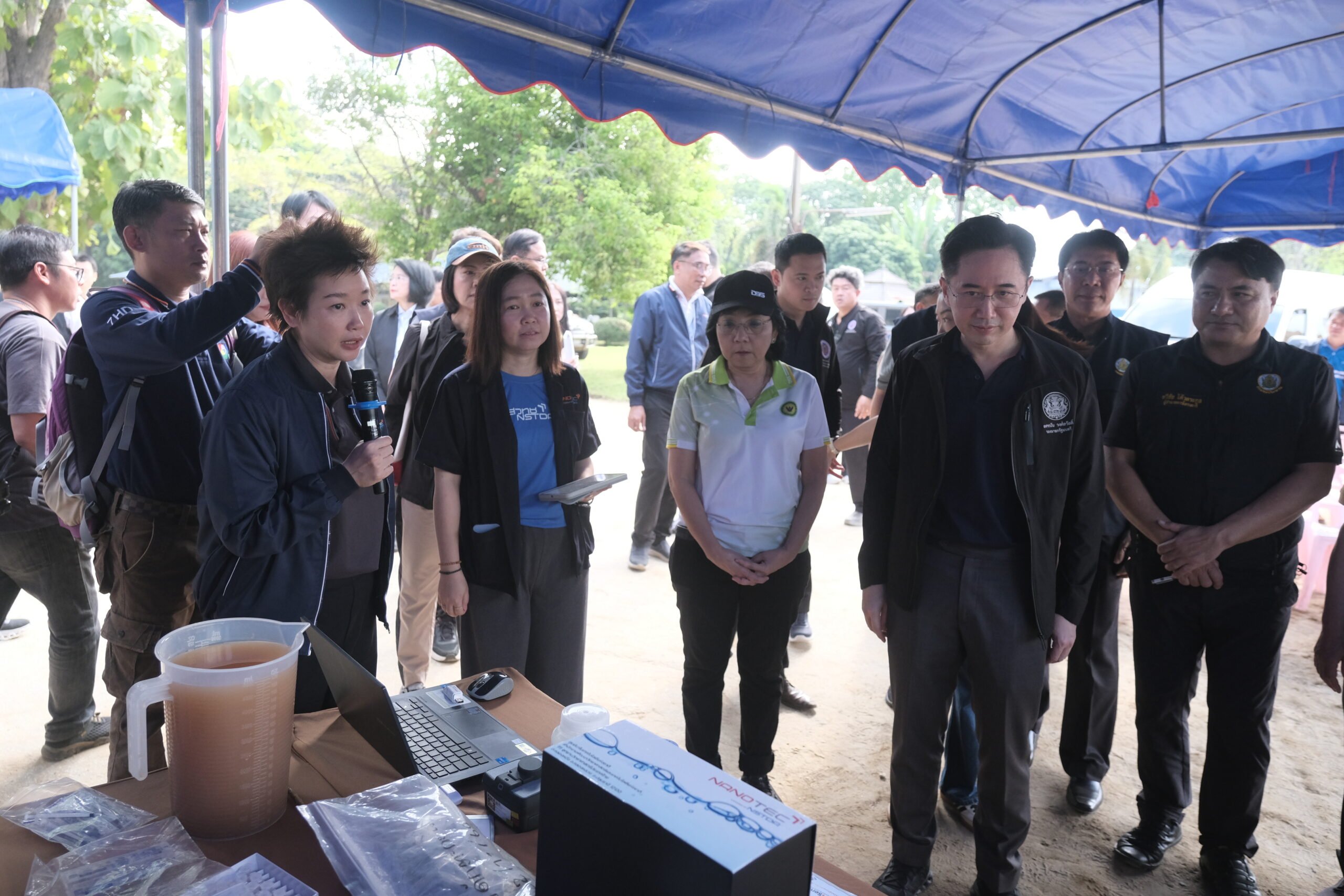
The first stop was Ban Mueang Daeng, where NANOTEC researchers demonstrated their field-testing equipment. The team collected raw water samples from the source, conducted on-site analysis, and displayed the results on a screen. Prof. Dr. Yodchanan then reviewed the waterway and irrigation canal network with technical experts and irrigation officials, explaining how the proposed structures would help capture contaminants.
He clarified that the proposed structure is a sediment trap, not a weir. It will not obstruct the main river, as some residents had feared. Instead, the project builds on an existing sediment-trapping area along an irrigation canal managed by the Royal Irrigation Department, located away from residential areas. The initial phase will involve installing one small-scale unit as a Sandbox demonstration, allowing residents to observe how the system works before any wider expansion.
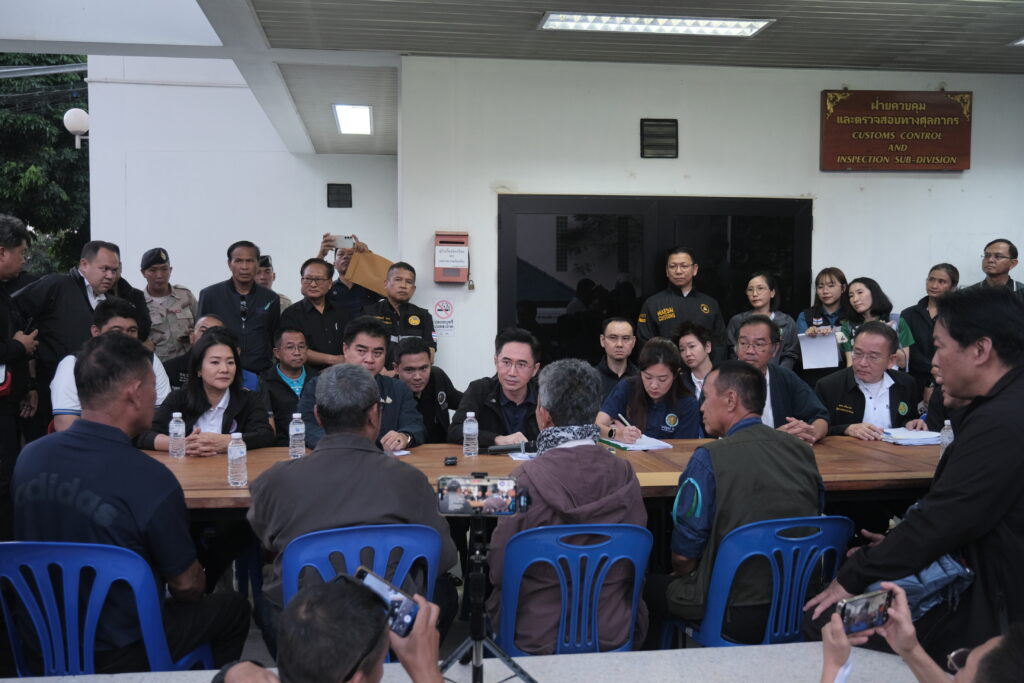
Prof. Dr. Yodchanan assured community leaders that the entire process would remain open to public inspection. Village heads, water user group representatives, and local residents will be able to visit the site and monitor the work at every stage, from system installation to checking which storage tanks contain arsenic-bearing sediment and when the collected material is transported for disposal.
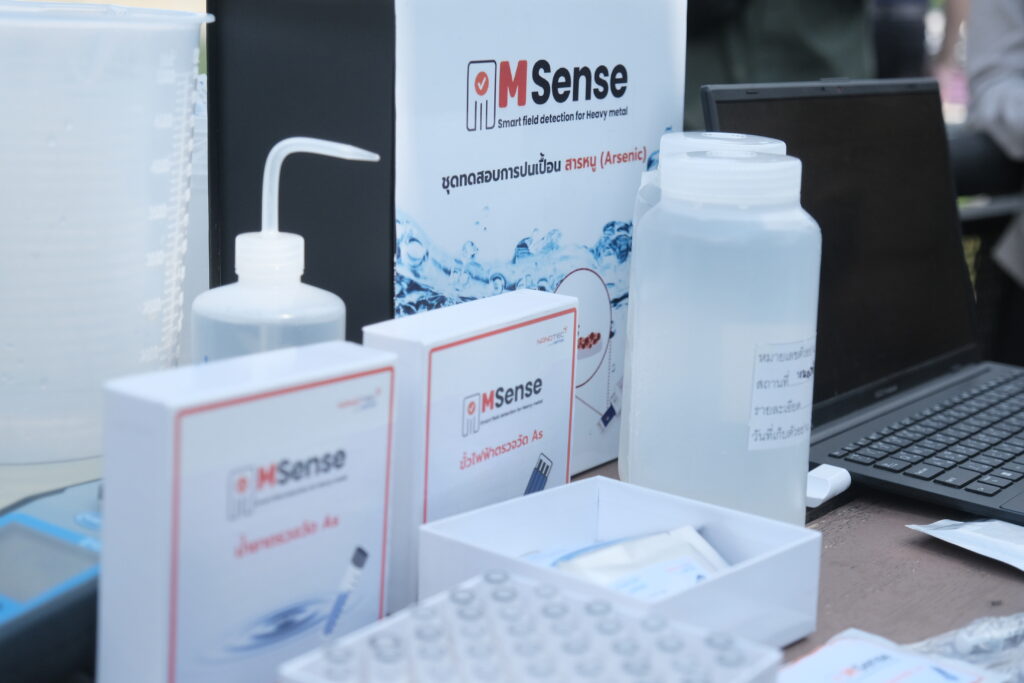
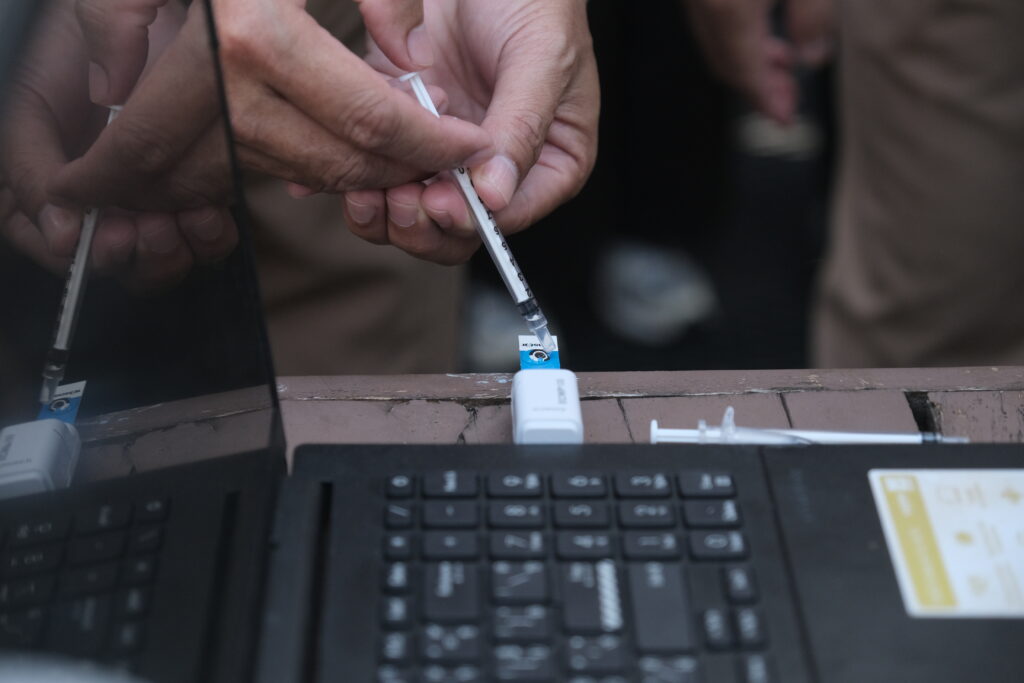
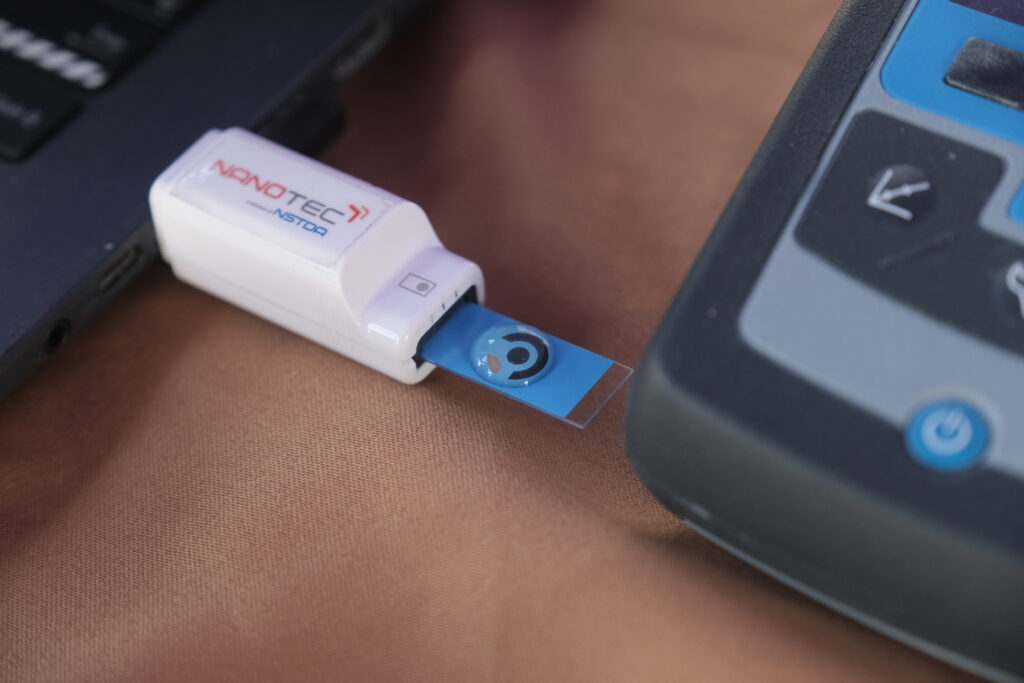
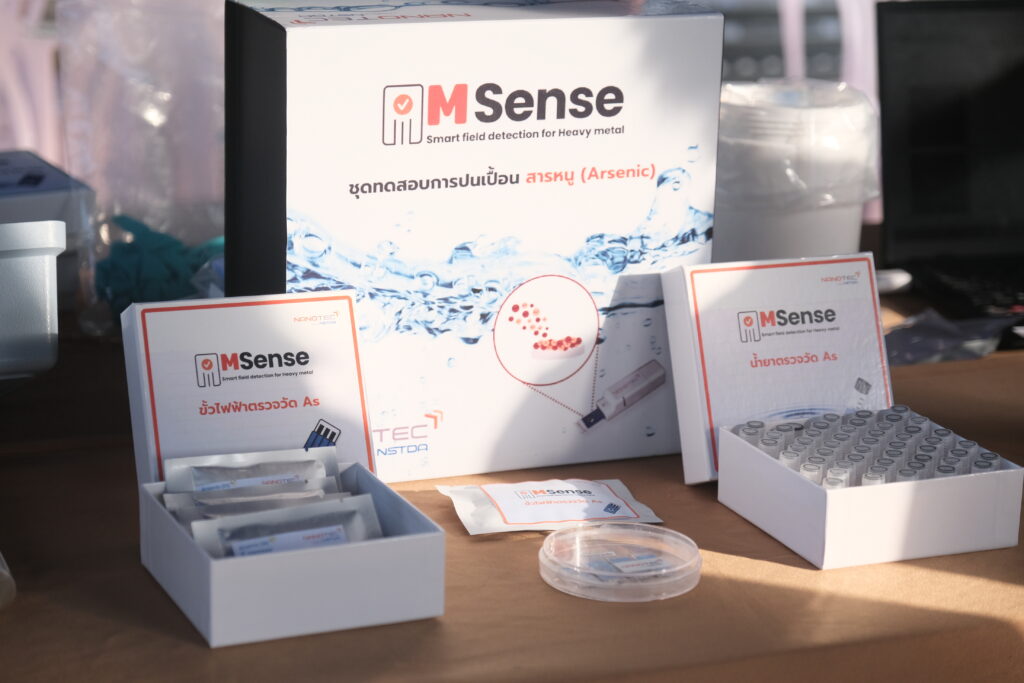
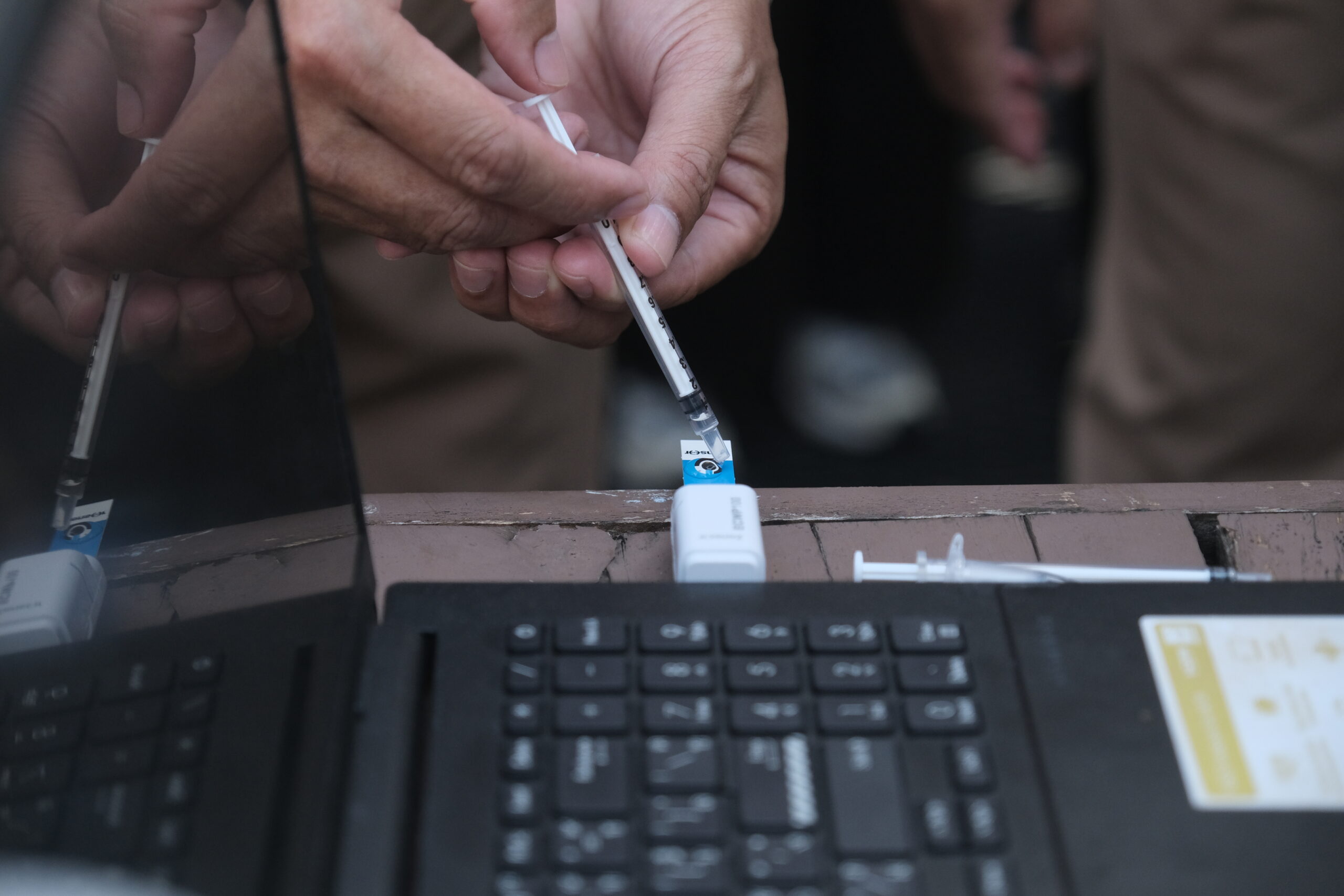
NANOTEC’s water quality testing equipment used in the field demonstration will also be handed over to local public health agencies and community committees for continued monitoring. This will give local communities access to tools they can use to track water quality on an ongoing basis. During the visit, the village head tested the M-Sense kit firsthand, finding it easy to use, with results available within 5 minutes.
Monitoring Water Quality at Nong Nam Phu Reservoir, a Key Backup Water Source for Mae Sai
The delegation then proceeded to Nong Nam Phu Reservoir in Pong Pha Subdistrict, approximately 9.8 kilometers from Mae Sai District, where NANOTEC researchers collected water samples and assessed potential contamination.
The reservoir is an important backup water source for the district. Its upper section covers 82 rai, with an average depth of 3 meters and an estimated storage capacity of 400,000 cubic meters. The lower section covers 21 rai, also with an average depth of 3 meters, and holds approximately 100,000 cubic meters. Together, the two sections have a total storage capacity of approximately 500,000 cubic meters.
NANOTEC and Local Agencies Advance Water Monitoring and Treatment Technologies
Dr. Uracha Ruktanonchai, Executive Director of NANOTEC, NSTDA, said that NSTDA is working with local agencies in Chiang Rai to deploy water monitoring and treatment technologies, helping communities gain access to safe water and greater confidence in the quality of the water they use every day.
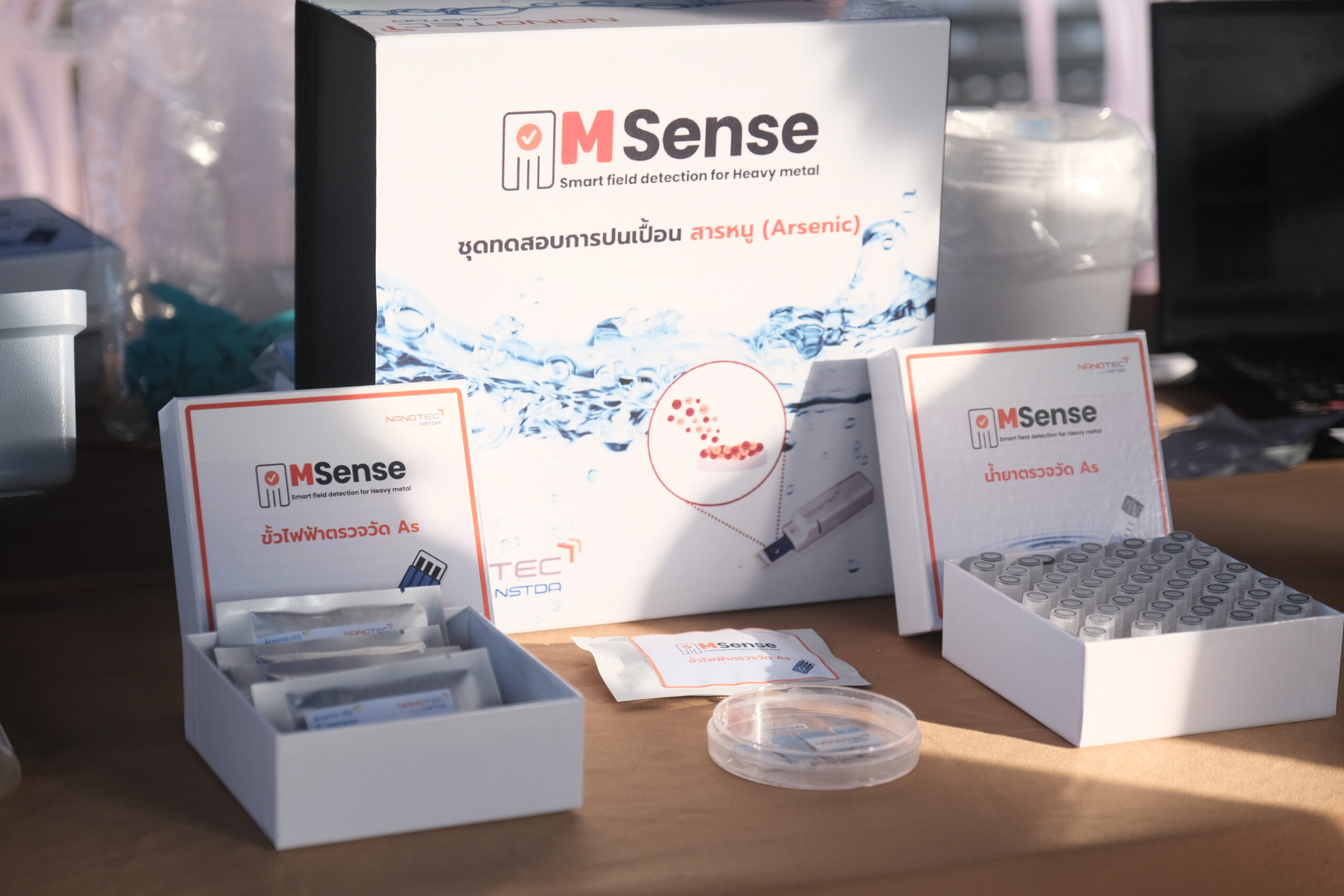
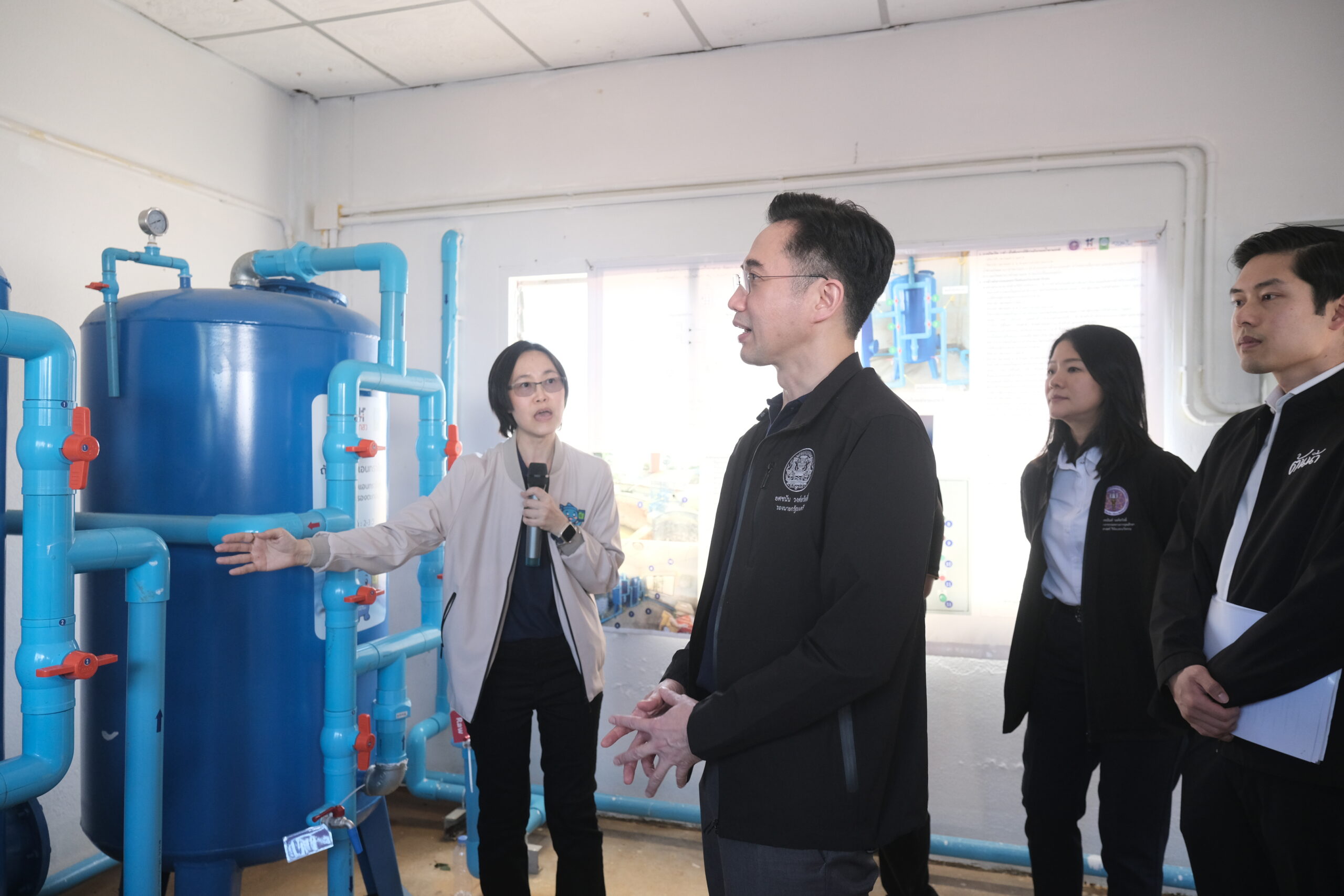
Under the A-QUALITY program, NSTDA applies an integrated approach covering three key functions: monitoring, treatment, and management. M-Sense enables local officials to obtain preliminary test results within minutes, while nanomaterial-based filtration systems help reduce arsenic contamination and water turbidity before water reaches the public. NANOTEC is also ready to transfer these technologies to government agencies and private-sector partners for wider implementation.
M-Sense: Portable Heavy Metal Detection with Results in Approximately 5 Minutes
M-Sense is a portable heavy metal detection kit based on electrochemical technology. The model deployed in Chiang Rai is designed for arsenic detection and displays results as numerical readings in the ppb–ppm range within approximately 5 minutes.
By comparison, sending samples to a laboratory for analysis can take around 1–2 weeks. M-Sense is therefore suitable for screening water at multiple locations and supporting faster decisions based on preliminary results. Laboratory testing remains necessary when confirmatory results are required for legal or regulatory purposes.
NSTDA previously handed over M-Sense kits to the Chiang Rai Provincial Public Health Office for water screening in the area. During this latest field mission, NSTDA also used the technology to monitor potential contamination at the Ban Mueang Daeng sediment trap and Nong Nam Phu Reservoir in Mae Sai District, Chiang Rai.
A-QUALITY: Integrated Water Management Powered by Locally Developed Nanomaterials
Alongside water monitoring, NSTDA’s A-QUALITY program applies an integrated water management approach built around three key dimensions: Monitor, Treat, and Manage.
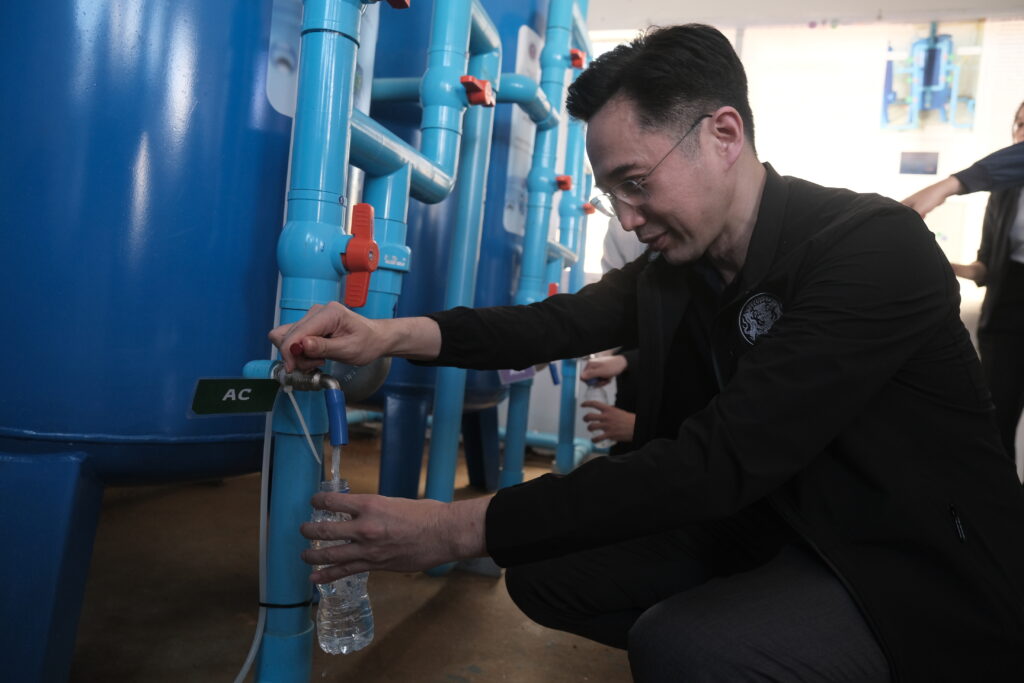
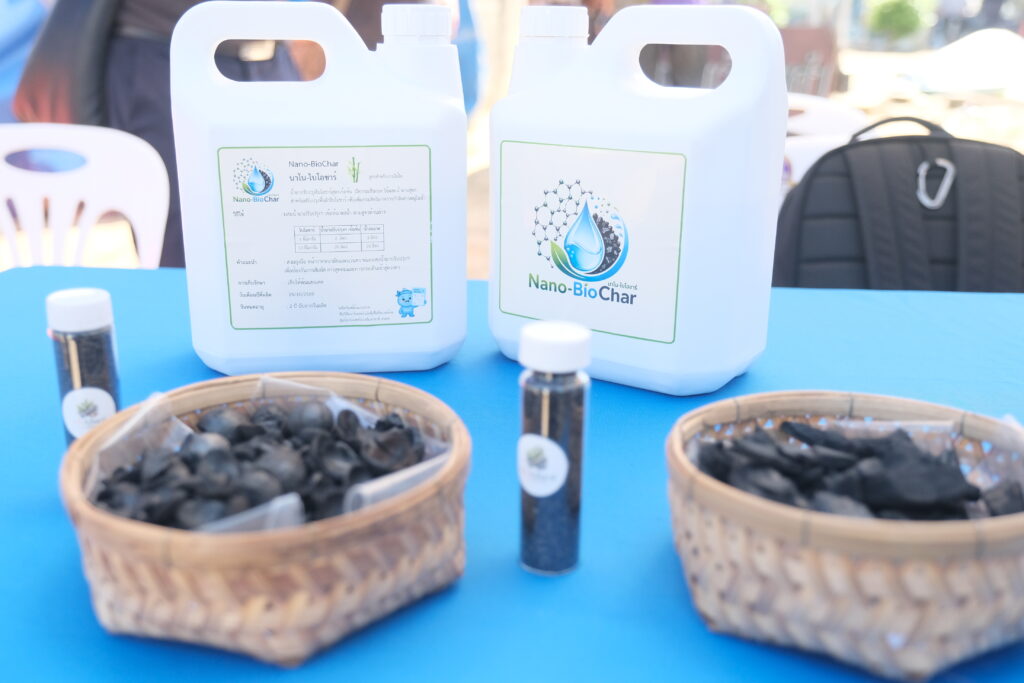
The treatment systems use nanomaterial-based adsorbents developed in Thailand, including Nano-Biochar produced from agricultural materials such as bamboo and macadamia nut shells. Other filtration materials, including An-ShieID and FerGACO, can be selected and adapted according to the types of contaminants found in each area.
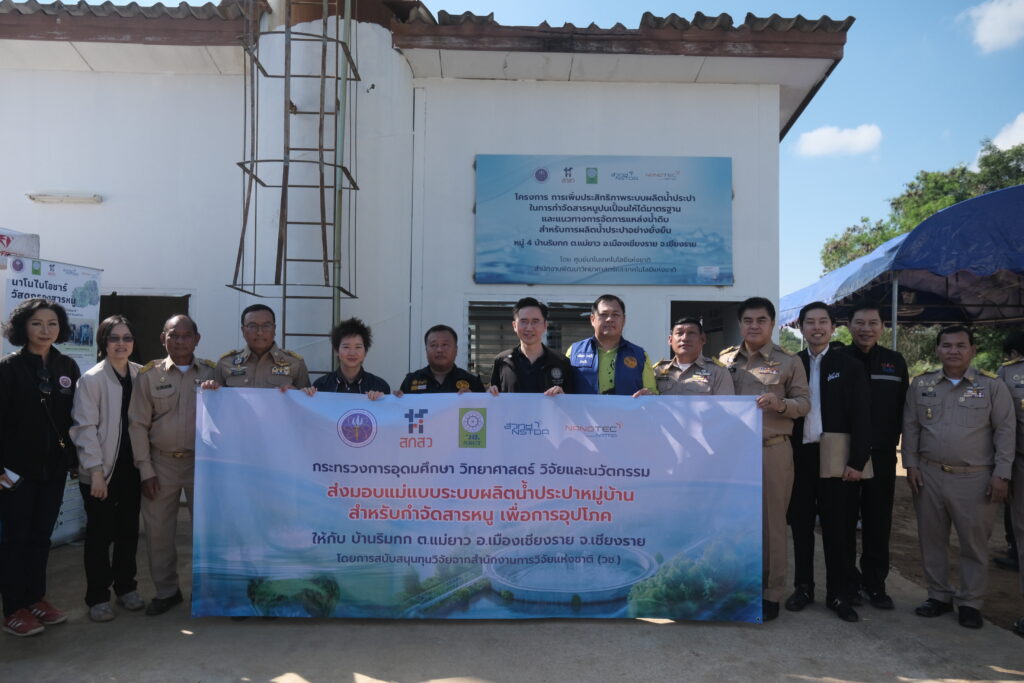
Results from the system installed in Ban Rim Kok, Chiang Rai, show that arsenic concentrations were reduced from 0.069 to 0.0035 milligrams per liter, representing a 94.9% reduction. The resulting concentration was below the drinking water standard of 0.01 milligrams per liter. Water turbidity also decreased from 155 to 10 NTU. The estimated treatment cost using Nano-Biochar is approximately THB 0.75–1.5 per cubic meter.
NANOTEC, NSTDA, has already installed model community water supply systems designed to remove arsenic for household use in two areas of Chiang Rai: Mae Yao and Rim Kok Subdistricts in Mueang District. Installation is underway in two additional areas: Ban Saeo Subdistrict in Chiang Saen District and Huai So Subdistrict in Chiang Khong District.
Connecting Water Quality Data to Local Decision-Making
For water management, NSTDA, through NANOTEC, is developing an approach that connects water quality data with decision-making by local authorities and public health agencies. Key tools include the Smart Alum Calculator, which helps calculate the appropriate amount of alum for water treatment; a GIS-based map of tap water quality; and IoT systems that provide early warnings of potential risks.
The program also connects public complaints through Traffy Fondue with relevant agencies, including the Chiang Rai Provincial Public Health Office, the Provincial Waterworks Authority, and the Provincial Office of Natural Resources and Environment, to support coordinated responses.
Additional M-Sense Kits Handed Over to Support Community-Based Water Monitoring
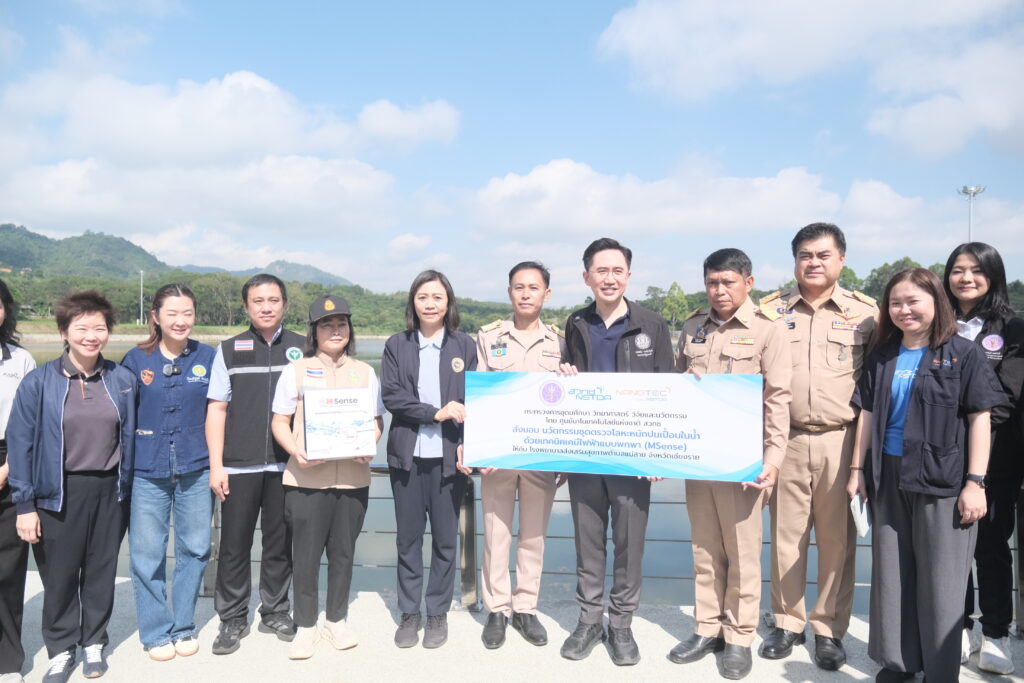
During this visit to Chiang Rai, the Deputy Prime Minister and the Minister of MHESI handed over additional M-Sense kits to Mae Sai Subdistrict Health Promoting Hospital and the Chiang Rai Provincial Public Health Office. NANOTEC researchers also demonstrated how to use the kits for preliminary water screening, helping address public concerns about water quality in Mae Sai.
Chiang Rai is serving as a Sandbox model for applying science and technology to address water quality challenges through an integrated approach. If successful, the model could be expanded to other regions of Thailand facing water quality crises. Communities in Chiang Rai stand to benefit from faster access to test results, improved water safety, and more targeted water management.