
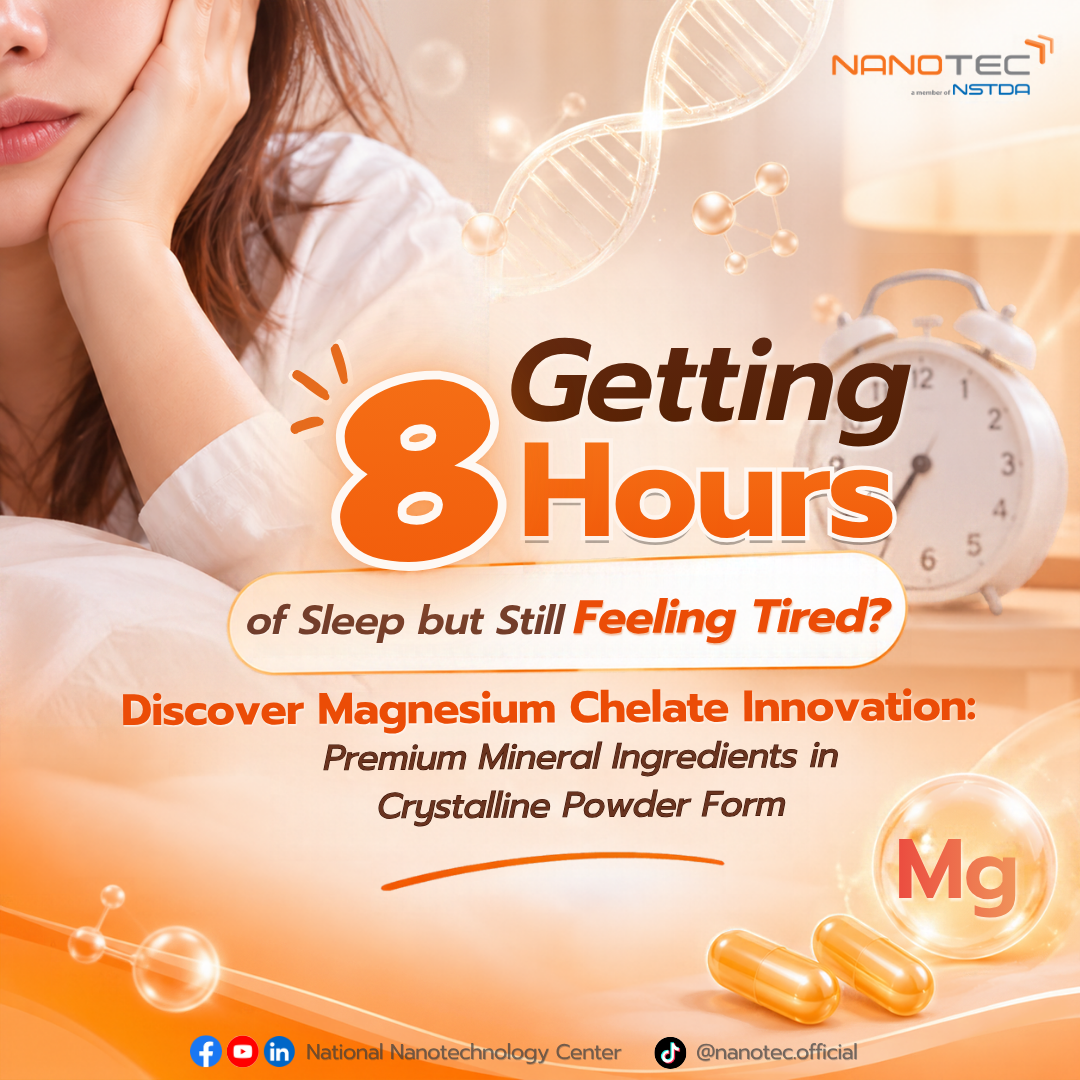
Magnesium is one of the minerals receiving growing attention in the dietary supplement market. It is often associated with muscle function, the nervous system and sleep. But what does magnesium actually do in the body? When is the best time to take it? And why are there different forms of magnesium in dietary supplements?
Magnesium is an essential mineral involved in a wide range of physiological processes, from energy production to muscle and nervous system function. Understanding its role and the differences between its various forms can help you make a more informed choice when selecting a supplement.
⚡ What Does Magnesium Do, and Why Does the Body Need It?
Magnesium is involved in more than 300 enzyme systems in the body. It contributes to several important physiological functions, including:
🥬 Food sources: Foods that provide magnesium include green leafy vegetables, nuts, seeds and whole grains. Eating a varied and balanced diet is an important way to obtain sufficient magnesium.
🌙 When Should You Take Magnesium? Is Before Bed the Best Time?
Magnesium is often recommended as a supplement to take before bedtime. This leads many people to wonder whether taking it at night offers greater benefits than taking it at other times of the day.
There is no single best time to take magnesium that applies to everyone. The timing may depend on the form of magnesium, the amount taken, individual needs and the product’s directions for use. Before choosing a supplement, check the amount of magnesium per serving, the type of magnesium compound, the recommended intake and any relevant precautions.
⚠️ People with underlying medical conditions, those who take medication regularly, and individuals with impaired kidney function should consult a healthcare professional before taking magnesium supplements.
Although magnesium plays an important role in muscle and nervous system function, taking a supplement does not necessarily resolve sleep problems or fatigue. These symptoms can have many possible causes and may require further assessment.
🔬 How Do Different Forms of Magnesium Differ?
When reading dietary supplement labels, you may come across several forms of magnesium, including magnesium oxide, magnesium citrate and magnesium glycinate. These names refer to the compounds formed when magnesium is combined with other substances. Each form has its own chemical and physical properties, which can influence characteristics such as solubility and absorption.
Some commonly used forms include:
1Magnesium Oxide
Magnesium oxide is a compound of magnesium and oxygen. It has a relatively high proportion of elemental magnesium by weight but dissolves poorly in water and is generally less well absorbed than some other forms of magnesium. Because of its laxative properties, it is also used in certain products formulated to relieve constipation.
2Magnesium Citrate
Magnesium citrate is formed by combining magnesium with citric acid. It is commonly used in dietary supplements and is generally more soluble in water and better absorbed than magnesium oxide. It is also found in products intended to support bowel regularity.
3Magnesium Malate
Magnesium malate is a compound of magnesium and malic acid. Malate is involved in cellular energy metabolism, which has led to interest in this form of magnesium for its potential role in supporting energy-related processes.
Magnesium malate is often considered by people experiencing fatigue or frequent muscle discomfort. However, evidence that supplementation can reduce these symptoms or increase energy levels remains limited. It is commonly positioned as an option for daytime use.
4Magnesium L-Threonate
Magnesium L-threonate is a compound of magnesium and L-threonic acid, a type of sugar acid. It has attracted research interest because of its potential to increase magnesium levels in brain tissue and its proposed ability to cross the blood-brain barrier (BBB).
This form is of particular interest in research on memory, concentration and cognitive function. Studies have explored its potential effects on brain health, including in relation to mild cognitive impairment (MCI). However, further clinical evidence is needed before conclusions can be drawn about its effectiveness for people with MCI or Alzheimer’s disease.
📖 Reference: Neural Regeneration Research, 19(10), pp. 2281–2289, October 2024. DOI: 10.4103/1673-5374.391310
5Magnesium Glycinate and Magnesium Bisglycinate
Magnesium glycinate and magnesium bisglycinate are forms in which magnesium is combined with the amino acid glycine. They belong to a group of compounds known as mineral amino acid chelates.
These forms are commonly chosen by people looking for magnesium supplements that are generally considered gentle on the digestive system. They are also frequently found in products marketed for sleep support, stress management and muscle cramp relief. However, the extent of their absorption and effects can vary, and claims of specific absorption rates should be assessed against the available scientific evidence.
🎯 When choosing a magnesium supplement, it is important to consider the form of magnesium and your intended purpose, rather than looking only at the total milligram amount. Different forms have different chemical properties, including solubility and bioavailability. The most suitable choice depends on individual needs and the product’s specifications.
🏷️ Reading the Label: What Is Elemental Magnesium?
Another important term to understand when reading supplement labels is elemental magnesium. This refers to the actual amount of magnesium in a compound, rather than the total weight of the compound itself.
For example, magnesium bisglycinate contains both magnesium and glycine. Its total compound weight therefore does not represent the amount of magnesium alone. Checking the elemental magnesium content on the label helps you determine how much magnesium each serving provides and makes it easier to compare different products.
💎 Discover NANOTEC’s Crystalline Chelate Technology
NANOTEC, under the National Science and Technology Development Agency (NSTDA), has developed Crystalline Chelate Technology for producing mineral amino acid chelates in crystalline dry powder form. These ingredients are designed for use in dietary supplements.
Mineral amino acid chelates are compounds in which metal ions are bound to organic molecules, such as amino acids, through chemical bonds formed in a process known as chelation. This approach combines minerals with organic ligands to create compounds with specific chemical properties.
✨ Key Characteristics of Mineral Amino Acid Chelates
- ⚡
Potential to support mineral absorption
Amino acids can be absorbed through specific transport systems in the body. The structure and properties of mineral amino acid chelates have therefore attracted interest in research into mineral absorption and utilization. - 📈
Mineral utilization
The chelation of minerals with amino acids is studied for its potential to influence how minerals are absorbed and utilized by the body. - 🌿
Digestive tolerance
Some conventional mineral compounds, including certain inorganic forms of iron and zinc, may cause nausea or gastrointestinal discomfort in some individuals. Amino acid chelates are developed as alternative mineral forms, with their properties and digestive tolerance depending on the specific compound. - 🛡️
Interactions with other dietary components
Certain food components, such as phytates, can bind minerals and affect their solubility and absorption. Chelation with amino acids may influence how minerals interact with these compounds. - 🤝
Chemical stability
The stability of a mineral chelate depends on its chemical structure and formulation. The amino acids used in the chelate may also serve as a source of amino acids for the body.
🧪 NANOTEC’s Technology and Developed Ingredients
NANOTEC’s Crystalline Chelate Technology covers a range of minerals, including calcium (Ca), magnesium (Mg), zinc (Zn), copper (Cu), iron (Fe), manganese (Mn), selenium (Se) and chromium (Cr). The process can be applied using different amino acids, such as glycine and methionine, as well as other organic acids.
The technology has been applied to the production of mineral chelate ingredients for dietary supplements, including Zinc Bisglycinate, Magnesium Bisglycinate and Magnesium Bis(L-Threonate).
One of the technology’s key features is the ability to control the molar ratio of amino acid to mineral at 2:1. A crystallization process is then used to produce the compounds in dry powder form. The resulting ingredients are characterized by high purity and stability. Their stability under simulated gastric acid conditions and their absorption characteristics have also been investigated. The technology can produce mineral chelate compounds in both solution and dry powder forms.
The specifications of the developed ingredients are as follows:
dry powder, w/w (up to)
dry powder, w/w
dry powder, w/w
Zinc Bisglycinate (CAS No. 14281-83-5; C4H8N2O4Zn): The dry powder form can be produced with a zinc (Zn) content of 30% w/w. The product registered with the Thai Food and Drug Administration (Thai FDA), registration number 13-1-10564-5-0018, is available in a 1 kg package with a zinc content of 20% w/w.
Magnesium Bisglycinate (CAS No. 14783-68-7; C4H8MgN2O4·H2O): The dry powder form can be produced with a magnesium (Mg) content of more than 12% w/w.
Magnesium Bis(L-Threonate): The dry powder form can be produced with a magnesium (Mg) content of more than 7% w/w.
🚀 The technology has reached Technology Readiness Level (TRL) 6, with a prototype developed at pilot scale. It is also supported by the following petty patent applications:
📜 Application No. 1803002015, Process for Preparing Metal Chelate Compounds of Amino Acids, filed on 7 September 2018.
📜 Application No. 2603003644, Process for Preparing Amino Acid Chelate Compounds with Magnesium, filed on 17 August 2026.
NANOTEC’s Crystalline Chelate Technology offers opportunities for businesses interested in developing mineral ingredients and dietary supplement products. Collaboration can take the form of technology licensing, testing services or joint product development.
National Science and Technology Development Agency (NSTDA)
🌐 Website: www.nanotec.or.th
📞 Tel: +66 2 564 7100
✉️ Email: info@nanotec.or.th
📚 References
National Institutes of Health (NIH), Office of Dietary Supplements. (2026). Magnesium: Health Professional Fact Sheet. https://ods.od.nih.gov/factsheets/magnesium-healthProfessional/
Warayut Sajomsang and Pattarapond Gonil, National Nanotechnology Center (NANOTEC). Petty Patent Application No. 1803002015: Process for Preparing Metal Chelate Compounds of Amino Acids. Filed 7 September 2018.
Warayut Sajomsang et al., National Nanotechnology Center (NANOTEC). Petty Patent Application No. 2603003644: Process for Preparing Amino Acid Chelate Compounds with Magnesium. Filed 17 August 2026.